Truck accidents fall under the same Pennsylvania personal injury framework as car crashes, but federal safety regulations, multiple potentially liable parties, and corporate defense teams add layers of complexity that change how the entire case must be built.
Some truck-crash evidence can disappear quickly if it is not preserved, including onboard camera footage, dashcam video, telematics data, dispatch communications, inspection records, and post-crash photographs. While federal rules require carriers to retain certain records, including ELD records and driver logs, for set periods, a preservation letter helps prevent the loss of additional evidence that may not be kept as long.
A Philadelphia truck accident lawyer can be critical when a commercial truck crash leaves you with catastrophic injuries and an insurance process far more complicated than a typical car accident claim.
The Rothenberg Law Firm LLP represents truck accident victims throughout Philadelphia and across Pennsylvania, New York, and New Jersey. Call 215-732-7000 for a free consultation.
Your rights matter, and we are here to fight for them
Why Are Truck Accident Claims More Complex Than Car Accident Claims?
Truck accident claims are more complex because they involve federal regulations that do not apply to passenger vehicles, multiple parties who may share liability, and critical evidence that may disappear within days without a formal legal hold.
A Philadelphia truck accident attorney with trucking-specific experience knows how to navigate these additional layers in ways that a general personal injury attorney may not.
Federal Regulations Create a Higher Standard of Care
Commercial truck drivers and the companies that employ them are subject to Federal Motor Carrier Safety Administration (FMCSA) regulations that do not apply to passenger vehicle drivers. These regulations govern how long a driver may operate, how the truck must be maintained, how cargo must be loaded, and what qualifications the driver must hold.
A violation of any FMCSA regulation at the time of the crash could be strong evidence of negligence.
Multiple Parties May Share Liability
Car accident claims typically involve two drivers. Truck accident claims may involve the driver, the trucking company, a cargo loader, a maintenance contractor, a vehicle or parts manufacturer, and, in rare cases, a freight broker.
Each party has its own insurance, its own defense team, and its own strategy for deflecting responsibility.
Evidence Disappears Quickly
While ELD records and driver logs are subject to federal retention rules, other critical evidence—such as onboard video, telematics data, dispatch messages, ECM data, maintenance communications, and scene evidence—may be lost much sooner unless a preservation demand is issued.
Since December 2017, the FMCSA has required many commercial drivers to use Electronic Logging Devices that sync automatically with the truck's engine, recording every change in duty status in real time.
Preserving this data before it is lost is one of the most time-sensitive steps in any truck accident claim.
Why Philadelphians Choose The Rothenberg Law Firm for Truck Accident Claims
Truck accident cases pit an injured individual against trucking companies, their insurers, and corporate defense teams that begin working to limit liability within hours of the crash. Families need a firm with the resources and experience to match that level of preparation.
The Rothenberg Law Firm LLP has spent more than 55 years representing people seriously injured in truck accidents across Philadelphia, Pennsylvania, New York, and New Jersey.
Our Philadelphia office at 1420 Walnut Street puts us in the middle of a city where commercial trucks share congested corridors with passenger vehicles every day. We know the routes, the intersections, and the loading zones where these crashes happen along I-76, I-95, Roosevelt Boulevard, and the freight corridors that run through North Philadelphia and the port district.
Trucking companies carry larger insurance policies than individual drivers, which means the financial stakes are higher and the defense is more aggressive. The Rothenberg Law Firm LLP has the litigation resources to go head-to-head with corporate defendants and their insurers.
Contact our truck accident lawyers in Philadelphia now for a free consultation: 215-732-7000.
What Federal Regulations Affect Philadelphia Truck Accident Claims?
FMCSA regulations governing driver hours, vehicle maintenance, cargo securement, driver qualifications, and drug and alcohol testing all affect how liability is established in a Philadelphia truck accident claim. When a trucking company or driver violates these regulations and a crash results, the violation itself may serve as evidence of negligence.
| Regulation | What It Governs | Why It Matters in a Crash Claim |
| 49 CFR Part 395 — Hours of Service | Limits driving to 11 hours within a 14-hour on-duty window after 10 hours off duty; requires a 30-minute break after 8 cumulative hours of driving time; caps weekly on-duty time at 60/70 hours | A fatigued driver who exceeded these limits was operating illegally at the time of the crash |
| 49 CFR Part 391 — Driver Qualifications | Requires valid commercial licenses, medical examinations, and minimum age and experience standards | A carrier that hired an unqualified or medically unfit driver may bear direct liability |
| 49 CFR Part 396 — Vehicle Maintenance | Mandates systematic inspection, repair, and maintenance of brakes, tires, steering, and lighting | Brake failure or tire blowout caused by deferred maintenance is evidence of carrier negligence |
| 49 CFR Part 393 — Cargo Securement | Governs how loads must be secured to prevent shifting, spilling, or falling during transit | An improperly secured load that caused a rollover or debris spill may create liability for the shipper or loader |
| 49 CFR Part 382 — Drug and Alcohol Testing | Requires pre-employment, post-accident, random, and reasonable suspicion testing | A carrier that failed to test or ignored positive results may face independent liability for the crash |
A trucking company that failed to maintain its vehicles, hired an unqualified driver, or pressured a driver to exceed hours-of-service limits may bear direct liability for a crash independent of the driver's own negligence.
Ask The Rothenberg Law Firm
Q: Do I need a truck accident lawyer, or is a regular car accident lawyer enough?
A: A regular car accident lawyer can sometimes handle a truck case, but for most truck crashes, you may be better off with a lawyer who specifically handles trucking claims. Truck cases often involve FMCSA regulations, multiple liable parties, and time-sensitive evidence like ELD data, driver logs, and maintenance records
Q: The trucking company's insurance adjuster contacted me right after the crash. What do I do?
A: You are not required to give a recorded statement. Providing a recorded statement to the trucking company's insurer before consulting an attorney may harm your claim. Adjusters are trained to obtain statements that minimize the carrier's liability. A Philadelphia truck accident lawyer may handle all communications with the insurer on your behalf.
Q: The truck driver was an independent contractor. Does the trucking company still bear responsibility?
A: A trucking company may still be liable even if the driver is labeled an independent contractor. In many trucking arrangements, the motor carrier operating under its DOT authority may bear responsibility for the safe operation of the vehicle, especially where leased equipment is involved. The answer depends on the carrier’s operating authority, the lease, dispatch records, insurance, and the facts of the crash.
Who May Be Held Liable After a Philadelphia Truck Accident?

Truck accident liability is rarely limited to the driver alone. The trucking industry's structure creates multiple layers of responsibility, and identifying every liable party is critical to maximizing the value of the claim.
Parties that may bear liability in a Philadelphia truck accident include:
- The truck driver who caused the crash through negligent, fatigued, distracted, or impaired driving
- The trucking company (motor carrier) that employed or contracted the driver, which may be liable for negligent hiring, inadequate training, pressure to violate hours-of-service rules, or failure to maintain the vehicle
- A cargo loading company or shipper that improperly loaded, overloaded, or failed to secure the truck's freight, contributing to a rollover, jackknife, or cargo spill
- A maintenance or repair contractor that performed substandard work on the truck's brakes, tires, steering, or other safety-critical systems
- A truck or parts manufacturer whose defective component, such as a faulty brake system or tire, contributed to the crash
Each liable party carries its own insurance coverage. Identifying all responsible parties early in the case expands the pool of available compensation.
Results That Matter: The Rothenberg Way
The Rothenberg Law Firm LLP has a track record in trucking cases that reflects the depth of preparation these claims require:
- $25 million for a motorcyclist who suffered a TBI and quadriplegia in a truck crash
- $7.3 million recovery for injuries in a trucking accident
- $5.5 million recovery in a truck accident crash
- $4.2 million for car occupants struck by a truck
- $4 million for a teen injured in a trucking accident
- $3.5 million for spinal injuries in a trucking accident
- $3 million for a traumatic brain injury suffered in a trucking accident
These recoveries reflect The Rothenberg Way — aggressive evidence preservation, collaboration with accident reconstruction and medical professionals, and the willingness to take cases to trial.
Past results do not guarantee future outcomes.
What Compensation May a Philadelphia Truck Accident Claim Pursue?
Economic and non-economic damages may be available.
Truck accident injuries tend to be catastrophic because of the size and weight disparity between commercial trucks and passenger vehicles. In fatal truck accidents, the majority of the victims are occupants of other vehicles, pedestrians, or motorcycle riders, not the truck occupants. The severity of these injuries directly affects the value of the claim.
Damages in a Philadelphia truck accident claim may include:
- Medical expenses for emergency trauma care, hospitalization, surgery, brain injury rehabilitation, spinal cord treatment, orthopedic care, physical therapy, and projected future medical needs
- Lost wages from time away from work during recovery, as well as diminished or eliminated earning capacity if the injuries prevent a return to employment
- Pain and suffering, emotional distress, and post-traumatic stress related to the crash and the recovery process
- Loss of enjoyment of life when catastrophic injuries limit mobility, independence, or the ability to participate in daily activities
- Property damage for the vehicle and personal belongings destroyed in the collision
Thorough documentation from the start of treatment strengthens every category of damages. In cases involving catastrophic injury, we work with life care planners and forensic economists to project the full cost of the injury over the client's lifetime.
In wrongful death cases, the personal representative of the deceased person's estate may pursue a claim on behalf of surviving family members for funeral costs, loss of financial support, and loss of companionship.
How Long Do You Have to File a Truck Accident Claim in Pennsylvania?
Pennsylvania's statute of limitations for personal injury and wrongful death claims is two years. Under 42 Pa. C.S. § 5524, a lawsuit for injuries caused by the wrongful act or negligence of another must be filed within two years from the date of injury or death.
Several additional deadlines and procedural considerations apply in truck accident cases:
- Claims against government entities require a written notice of intent to sue within six months of the accident
- Federal regulations require trucking companies to retain certain records for specific periods, but ELD data and onboard camera footage may be overwritten much sooner without a formal preservation demand
- Evidence from the crash scene, including physical damage to the vehicles, road markings, and debris patterns, degrades quickly and may be cleared within hours
Starting a truck accident case early is not just advisable. It is often the difference between preserving the evidence that proves liability and losing it permanently.
Why Is I-95 Through Philadelphia So Dangerous for Trucking Accidents?
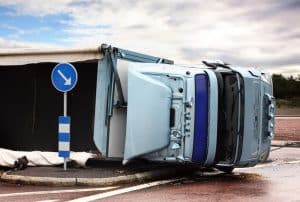
I-95 cuts through dense neighborhoods, major interchanges, industrial corridors, and active commercial zones. The roadway carries local commuters, tourists, delivery vehicles, and long haul trucks around the clock. These overlapping traffic patterns increase the likelihood of serious crashes involving commercial vehicles.
Traffic conditions change quickly along this corridor. A stretch that flows freely one moment can back up without warning due to congestion, road work, or an earlier crash. Large trucks require more time and distance to react to sudden changes, contributing to various types of truck accidents.
What Are the Most Common Causes of Truck Accidents on I-95?
Truck crashes often involve a combination of human decisions, mechanical issues, and company policies. Recognizing common causes helps injured people understand how negligence may have contributed to a collision.
Driver Fatigue and Hours of Service Violations
Federal rules limit how long a truck driver may remain behind the wheel without rest. Fatigue affects alertness, judgment, and reaction time. Some drivers exceed legal driving limits due to delivery pressure or unrealistic schedules. Logbooks and electronic records often reveal whether a driver stayed on the road too long.
Improper Loading and Cargo Securement
Cargo must be loaded evenly and secured properly. Shifting weight can destabilize a trailer, particularly during turns or sudden stops. Overloaded trucks require more distance to brake and place added stress on tires and suspension systems. Loading mistakes often trace back to third party warehouses or freight handlers.
Inadequate Vehicle Maintenance
Commercial trucks operate under demanding conditions and require frequent inspections. Worn brakes, steering issues, and tire failures contribute to serious crashes. Maintenance records sometimes show skipped inspections or delayed repairs. A company’s failure to keep vehicles roadworthy often plays a role in collisions.
Distracted or Impaired Driving
Distractions inside the cab divert attention from the road. Mobile devices, navigation systems, and onboard communications can pull focus away at the wrong moment. Alcohol or drug use further slows reaction time. Even brief distraction can lead to devastating results when a vehicle weighs tens of thousands of pounds.
Speeding and Aggressive Driving
Delivery deadlines sometimes encourage speeding or unsafe driving behavior. Following too closely or changing lanes aggressively leaves little room to respond to traffic changes. Speed magnifies the force of impact and increases the severity of injuries when a crash occurs.
How Does Pennsylvania’s Comparative Negligence Law Affect Trucking Accident Claims?
Fault allocation plays a major role in Pennsylvania injury cases. Understanding how fault affects recovery helps people evaluate their options.
The 51 Percent Bar Rule
Pennsylvania uses a modified comparative negligence system. A person who carries more than half of the fault cannot recover damages. When fault stays at or below 50 percent, recovery reduces by the assigned share.
How Fault Is Determined
Insurance companies and courts review crash reports, witness statements, vehicle data, and expert analysis. Each party’s actions receive a percentage of fault based on the evidence.
Impact on Settlement Negotiations
Insurers often argue fault to limit payouts. Clear documentation and consistent evidence counter attempts to shift blame unfairly.
Truck Accident Claims Answered by Our Philadelphia Truck Crash Attorneys
What types of trucks are involved in Philadelphia truck accident claims?
Truck accident claims in Philadelphia involve:
- Tractor-trailers
- Semi-trucks
- Delivery vans
- Dump trucks
- Garbage trucks
- Concrete mixers
- Tanker trucks
- Other commercial vehicles that meet the federal definition of a commercial motor vehicle
Many vehicles weighing 10,001 pounds or more, or transporting certain hazardous materials, may fall under FMCSA regulations and create the potential for a truck accident claim with multiple liable parties.
What if the truck driver was not at fault, but the truck had a mechanical failure?
Mechanical failures may shift liability to the trucking company that failed to maintain the vehicle, the maintenance contractor that performed substandard repairs, or the manufacturer that produced the defective component. Regulations require systematic inspection and maintenance of commercial vehicles. Failure to comply with those requirements may constitute negligence.
What if I was partly at fault for the truck accident?
You may still recover compensation. Pennsylvania follows a modified comparative negligence rule under 42 Pa. C.S. § 7102. Your award is reduced by your percentage of fault, but the claim is barred if your share of fault is greater than the defendant’s share.
How much does it cost to hire a Philadelphia truck accident lawyer?
The Rothenberg Law Firm LLP handles truck accident cases on a contingency fee basis. You pay no upfront fees and no attorney costs unless the firm recovers money for you. A free consultation lets you discuss your case and understand your legal options without financial risk.
Who Can Be Held Liable in a Philadelphia Trucking Accident?
Truck accident claims often involve several responsible parties. Identifying each one helps build a stronger claim and ensures accountability aligns with actual conduct.
The Truck Driver
Drivers must follow traffic laws and federal safety rules. Fatigue, distraction, impairment, or unsafe driving decisions may place responsibility on the individual operating the truck.
The Trucking Company
Trucking companies oversee hiring, training, scheduling, and maintenance. Pressure to meet deadlines or failure to enforce safety policies often traces back to company practices. Employers may bear responsibility for a driver’s actions during work duties.
Cargo Loading Companies
Third-party companies often handle loading and securement. Improper loading can cause rollovers or loss of control. These trucking companies may share liability when loading errors contribute to a crash.
Vehicle Maintenance Providers
Some companies outsource inspections and repairs. Poor workmanship or overlooked problems can lead to mechanical failure. Maintenance contractors may bear responsibility when negligence affects vehicle safety.
Truck Manufacturers and Parts Suppliers
Defective components such as brakes, tires, or steering systems sometimes play a role. Product liability claims address design flaws or manufacturing defects that contribute to crashes.
Get Answers After a Philadelphia Large Truck Crash

Truck accident claims move fast on the defense side. The trucking company's insurer, defense attorneys, and accident response teams begin working immediately. The sooner your family speaks with a Philadelphia truck accident lawyer, the sooner critical evidence is preserved and your claim begins to take shape.
Call The Rothenberg Law Firm LLP now at 215-732-7000 or reach us through our online contact form to discuss your truck accident claim.
Your rights matter, and we are here to fight for them
The Rothenberg Law Firm Accident and Injury Lawyers - Philadelphia Office
1420 Walnut St
Philadelphia, PA 19102
Ph: (215) 330-6551