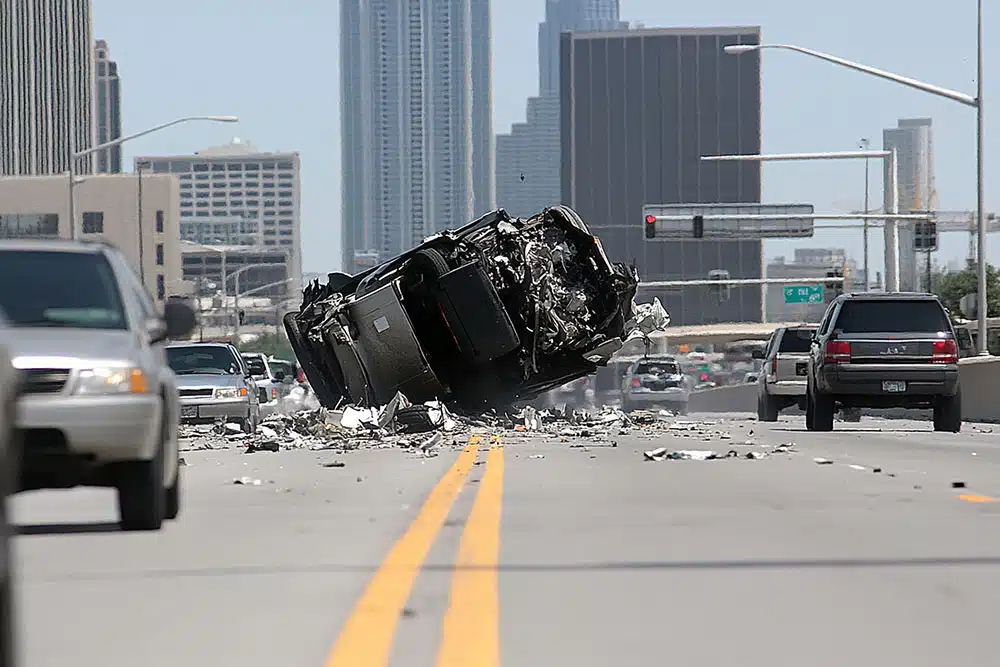




Many drivers believe a minor car accident is a simple problem to solve, and a common misconception is that if you feel fine at the scene, you can just exchange information and move on. However, New York’s no-fault insurance rules can create a complex process, even for minor accidents, especially if symptoms such as soreness appear days after the incident.
These rules control how you get medical bills paid and require you to follow strict procedures, regardless of how minor the collision seemed.
While the system is designed to provide quick access to benefits through your own insurance policy, it can be complicated to navigate on your own, nonetheless.
Key Takeaways for New York’s No-Fault Insurance Rules
- After any accident, including a minor one, your first claim for medical costs and lost wages is with your own auto insurer under your Personal Injury Protection (PIP) coverage.
- You must file a formal no-fault application with your insurer within 30 days of the crash, even if your injuries seem insignificant at first.
- PIP benefits cover economic losses like medical bills and a portion of lost wages, but don’t pay for pain and suffering.
- For minor accidents, a personal injury lawsuit against the at-fault driver is usually not an option because the injuries don’t meet the state’s serious injury threshold.
- Insurance companies can and do deny benefits for missed deadlines or incomplete paperwork, making careful management of your claim essential.
What Personal Injury Protection Actually Covers
After a minor car accident, the first place you turn for financial help is your own car insurance policy. This is a core principle of New York’s no-fault insurance rules. The system mandates that every driver carry Personal Injury Protection (PIP), which pays for your initial financial losses without needing to determine who was at fault for the crash.
PIP benefits cover your basic financial loss, which refers to the direct, calculable costs you incur. For instance, if a fender-bender causes a nagging neck injury, your PIP can pay for doctor’s visits, physical therapy, and prescriptions. It also provides a buffer for lost income if you have to miss a few days of work to recover.
The primary goal of PIP is to ensure you can get medical care without delay. The minimum required coverage is $50,000 per person. While that amount may seem substantial, medical costs can add up quickly, even for seemingly minor injuries.
Covered Economic Losses
Your PIP coverage is specifically for reimbursing verifiable financial costs related to your injuries. The system works by having your medical providers bill your auto insurer directly. This process forms the foundation of what New York’s no-fault insurance rules provide after a collision.
Common examples include:
- Medical Treatment: This covers all necessary medical services, including urgent care visits, chiropractic adjustments, physical therapy sessions, and prescription drugs.
- Lost Wages: You can receive 80% of your lost income, with a cap of $2,000 per month, for up to three years, covering time you needed to take off from work to recover.
- Daily Expenses: The policy allows up to $25 per day for up to one year to help with other necessary costs, like using a rideshare service to get to a doctor’s appointment.
- Death Benefit: A policy provides a $2,000 benefit to the estate of someone whose death is caused by a car accident.
What PIP Doesn’t Cover
The limitations of PIP often become a point of frustration for those in minor accidents. The law intentionally restricts these benefits to economic costs only. Consequently, your no-fault benefits don’t compensate you for the daily pain, inconvenience, and frustration an injury causes.
PIP coverage specifically excludes these damages:
- Pain and Suffering: The policy offers no payment for the physical discomfort, aggravation, or emotional stress resulting from your injuries.
- Full Wage Loss: If you earn more than $2,500 per month, the $2,000 monthly cap on lost wage benefits means you absorb the remaining financial loss yourself.
- Loss of Enjoyment: PIP doesn’t compensate you for being unable to go to the gym, play with your children, or engage in other daily activities because of your injuries.
- Property Damage: Costs to repair your vehicle are handled under a separate part of your or the other driver’s insurance, not through PIP.
The Serious Injury Threshold: Why You Usually Cannot Sue After a Minor Wreck
New York’s no-fault insurance rules establish a crucial trade-off. You get fast payment for medical bills and lost wages through PIP. In exchange, you forfeit your right to sue the driver who caused the accident for pain and suffering.
This barrier to lawsuits is called the serious injury threshold. To step outside the no-fault system and file a personal injury lawsuit, your injury must fit one of the specific, high-bar categories defined by New York law.
For most minor accidents, injuries like sprains or significant bruising don’t meet this legal standard. As a result, your financial recovery is typically limited to the benefits your PIP policy provides.
Even if another driver was clearly 100% at fault, the law prevents you from holding them accountable for your physical pain and inconvenience unless your injury is medically and legally deemed “serious.”
Defining a Serious Injury
The law is very precise about what qualifies as a serious injury. A diagnosis of an injury isn’t enough; the condition must be documented and proven to fit one of these definitions. You can see how these categories are intended to apply to severe, not minor, accidents.
The law defines a serious injury as one that results in:
- Death: The accident results in a fatality.
- Dismemberment: The traumatic loss of a limb.
- Significant Disfigurement: Permanent and noticeable scarring.
- Fracture: A broken bone.
- Loss of a Fetus: A miscarriage caused by the accident.
- Permanent Impairment: The total and permanent loss of use of a vital body part or function.
- Significant Limitation: A major, non-permanent restriction on the use of a body function or system.
- 90/180-Day Rule: A non-permanent medical impairment that keeps you from performing most of your usual daily activities for at least 90 of the first 180 days after the collision.
What Happens When an Injury Doesn’t Qualify
If your injuries don’t meet the serious injury threshold, your path to compensation stays within the no-fault system. This means your financial relief is strictly limited to the economic damages paid by your PIP coverage. You cannot file a lawsuit for pain, suffering, or emotional distress.
This limitation can feel unjust, particularly when another driver’s carelessness has disrupted your life. However, this is how New York’s no-fault insurance rules are structured. The system prioritizes rapid payment for medical bills over personal accountability for less severe injuries.
It also means that any economic losses beyond your $50,000 PIP limit become your own responsibility.
If the medical costs from a supposedly “minor” injury grow over time and exhaust your benefits, you may have few options for additional coverage unless your condition worsens to meet the serious injury definition.
Critical Deadlines Under New York’s No-Fault Insurance Rules

Strict deadlines are a central feature of New York’s no-fault insurance. An insurance carrier can deny your entire claim if you fail to meet the requirements. This is true for all accidents, regardless of how minor they may seem at first.
The first and most important deadline is the 30-day window for filing your claim. You must submit a completed Application for No-Fault Benefits (Form NF-2) to your insurer within 30 days of the collision.
If you wait, an insurer has a legal basis to refuse payment, even for legitimate medical expenses. Additionally, your doctors must submit their bills to your insurer within 45 days of providing treatment.
While this is your doctor’s responsibility, provide them with your claim information promptly. Following these timelines protects your access to the benefits your insurance policy provides.
When To Call a Lawyer for Help With New York’s No-Fault Insurance Rules
The hours and days after an accident are filled with uncertainty. An injury that seems minor today can develop into a chronic and debilitating condition tomorrow. This is the critical point when you should seek legal guidance.
If you suspect your injury might be serious, or if your symptoms are worsening and affecting your ability to live your life normally, contact a personal injury lawyer.
When you have a case, a law firm manages both the immediate no-fault claim and the potential personal injury lawsuit at the same time. This integrated approach ensures your current medical bills and lost wages get paid through your PIP benefits.
Simultaneously, your legal team builds a comprehensive case against the at-fault driver to recover the full compensation that New York’s no-fault insurance rules don’t provide.
An experienced attorney provides comprehensive support for every facet of your case:
- No-Fault Claim Management: Your lawyer can properly file the NF-2 application and manage all no-fault paperwork to protect your right to immediate medical and lost wage benefits.
- Proving Negligence: Your legal team investigates the crash, gathers police reports and witness statements, and establishes a clear record of how the other driver was at fault.
- Establishing Serious Injury: They work directly with your medical providers to obtain the necessary documentation and expert opinions to prove your injury meets the legal threshold for a lawsuit.
- Calculating Full Damages: Your attorney assesses the total financial impact of your injury, including future medical needs, all lost income, and the non-economic damages for pain and suffering that PIP won’t cover.
- Handling All Negotiations: They manage all communications with every insurance company involved, shielding you from adjusters while fighting to secure a settlement that fully addresses your losses.
FAQ for New York’s No-Fault Insurance Rules
What Is the First Thing I Should Do To Start My No-Fault Claim?
Your immediate priority is to inform your own car insurance company of the accident. Then, you must accurately complete and submit the Application for No-Fault Benefits (Form NF-2).
New York law gives you only 30 days from the accident date to file this form with your insurer to secure your right to benefits.
Do I Have To Pay Medical Bills From My Own Pocket?
Avoid using your own money to pay for medical care. When you see a doctor, provide them with your car insurance policy and no-fault claim number. The provider’s office will then bill your auto insurer directly for all approved treatments covered by your PIP policy.
Who Is Covered by My Personal Injury Protection Policy?
Your PIP benefits extend beyond just you. The policy also provides coverage for relatives who live in your household, such as a spouse or minor children, if they’re injured in an auto accident.
In addition, PIP covers any non-related passengers who were in your car during the crash, and any pedestrians or bicyclists injured in a collision involving your vehicle.
Can I Still Sue if My Injuries Don’t Seem Serious at First but Get Worse?
While a lawsuit is unlikely for most minor accidents, it’s not impossible if your condition deteriorates. The law allows a lawsuit only if your injury meets the state’s serious injury threshold. An injury that initially appears minor, such as a back strain, may later be diagnosed as a herniated disc that requires surgery.
A lawyer can evaluate your medical records to determine if your case has become strong enough to step outside the no-fault system.
What Do New York’s No-Fault Insurance Rules Say About Lost Wages?
The rules permit you to recover 80% of your lost income, up to a $2,000 monthly limit, for as long as three years. To receive this benefit, you need to submit income verification to your insurer, typically with recent pay stubs.
Your employer will also need to complete a form to confirm your salary and dates of absence from work.
Protecting Your Rights After a Minor Accident
A minor accident can create major administrative headaches. Your immediate goal is to prevent a minor issue from escalating into a substantial financial burden due to a missed deadline or paperwork error.
If you suffered a serious injury, call The Rothenberg Law Firm at (888) 991-3996 for your free consultation.