



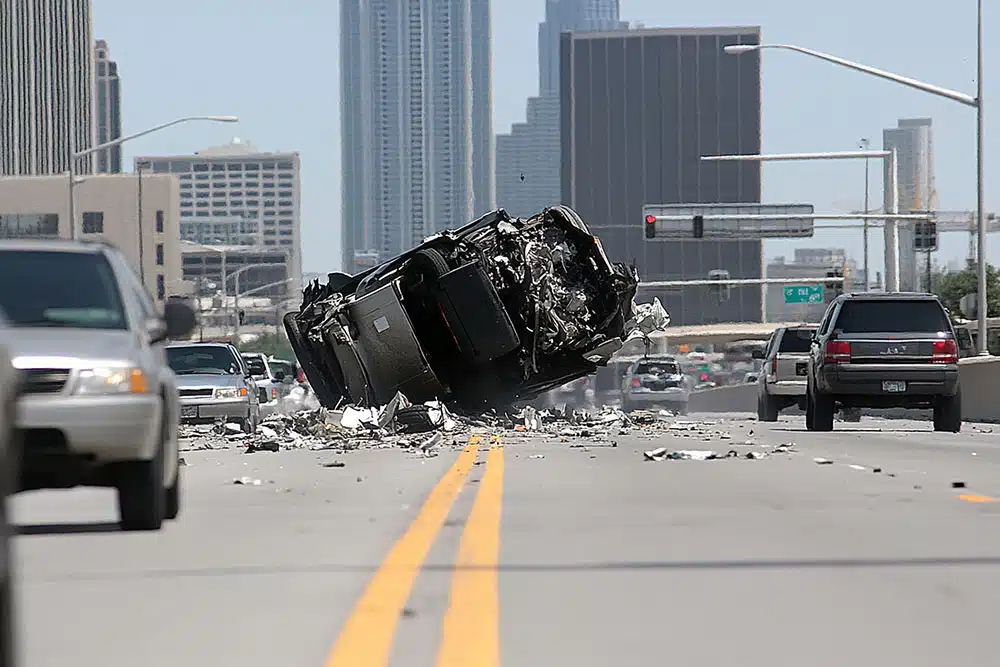
A rideshare collision leaves confusion in its wake, forcing you to sort through the wreckage. The complexity of these situations, particularly in high-traffic areas around Philadelphia International Airport (PHL), raises pressing questions about accountability.
Untangling the web of corporate and personal insurance policies is a challenging task following a Lyft accident near Philadelphia International Airport. Rideshare accident claims involve multiple parties and intricate insurance rules that differ from standard car accident claims.
The actions you take next can significantly influence your financial recovery. Securing legal guidance helps you approach this challenge from a position of strength.
Key Takeaways for Lyft Accidents Near PHL
- Lyft’s insurance policy application depends entirely on the driver’s activity within the app at the moment of the crash.
- Multiple parties, including the Lyft driver, another motorist, or even Lyft itself, can hold liability for your injuries.
- You may pursue compensation for medical bills, lost wages, and pain and suffering from the at-fault party.
- Insurance companies often try to minimize payouts or shift blame after a rideshare accident.
- An experienced attorney investigates the crash, determines all available insurance coverage, and handles communication with insurers on your behalf.
Unique Driving Challenges Increase Accident Risks Near PHL
The area surrounding Philadelphia International Airport presents a complex and high-stress driving environment. A constant mix of passenger cars, commercial shuttles, and rideshare vehicles creates dense traffic conditions.
This congestion, combined with confusing roadway designs, contributes to a higher frequency of collisions.
The Convergence of Major Highways and Local Roads
Major arteries like I-95 and Route 291 feed directly into the airport’s road network. Drivers must quickly process signage for arrivals, departures, and rental car returns.
Motorists unfamiliar with the area often make sudden lane changes or slow down unexpectedly, creating dangerous conditions for everyone around them. A moment of indecision can easily lead to a serious crash.
The interchanges connecting these highways with local streets like Bartram Avenue and Island Avenue are frequent sites for accidents. The sheer volume of traffic merging and exiting at high speeds leaves little room for driver error.
Rideshare drivers face unique pressures that can affect their driving. They frequently check their phones for ride information and passenger locations, which causes significant distractions. The designated Ride App Pickup zones at PHL force drivers to navigate crowded lanes and make abrupt stops.
These pressures often result in dangerous driving habits, such as:
- App-Related Distractions: Drivers interact with their phones to accept rides, navigate, and communicate with passengers, taking their attention away from the road.
- Abrupt Maneuvers: A driver may unexpectedly slow down or stop in active traffic lanes when they spot their passenger or get confused by the airport layout.
- Aggressive Lane Changes: To get to a designated pickup area or avoid missing a turn, drivers might cut across several lanes of traffic without sufficient warning.
- Driver Fatigue: Many drivers work long hours during peak airport travel times, which can lead to slower reaction times and impaired judgment behind the wheel.
This behavior, born out of the need to quickly locate and pick up fares, adds another layer of unpredictability to an already challenging traffic environment. An accident caused by these specific behaviors requires a thorough investigation.
Identifying the financially responsible party after a Lyft crash near Philadelphia International Airport requires a detailed investigation. Several entities can share fault, depending on the specific circumstances of the collision. Figuring out who pays for your damages begins with this crucial step.
Your attorney’s investigation pinpoints who caused the accident and which insurance policies apply to your situation. This process removes the burden from you. You can focus on your recovery while a legal professional establishes the foundation of your claim.
When Another Driver Causes the Crash
In some Lyft collisions near PHL, a third-party driver is at fault. A negligent driver who hits your Lyft vehicle holds liability for your injuries; in this scenario, your claim proceeds against that driver’s insurance policy.
Lyft’s Potential Corporate Responsibility
While Lyft classifies its drivers as independent contractors, the company may still hold some responsibility. For instance, if Lyft failed to conduct a proper background check on a driver with a poor driving record, the company might be liable for negligent hiring.
Proving corporate negligence requires access to internal company records and a deep understanding of state and federal transportation laws. A legal team with experience in this area knows how to uncover evidence of corporate fault.
Lyft’s Insurance Coverage Periods Explained

Lyft provides different levels of insurance coverage based on the driver’s real-time actions. These coverage periods are distinct and determine whose insurance company pays for your damages, and the transitions between these periods can become major points of contention in an injury claim.
Period 0: The Driver Is Offline
When a Lyft driver isn’t logged into the app, they’re considered a private motorist. If they cause an accident during this time, their personal automobile insurance is the only coverage available.
Common challenges include:
- Policy Exclusions: Many personal auto insurance policies deny claims if the driver was engaged in any commercial activity, even if they were on the way to work.
- Insufficient Coverage: The driver’s personal policy may not provide sufficient coverage for serious injuries.
- Driver Honesty: A driver might untruthfully claim they were offline at the time of a crash to avoid trouble with Lyft.
Period 1: The Driver Is Waiting for a Ride Request
Once a driver logs into the Lyft app and is available to accept a ride request, a limited form of Lyft’s insurance applies. This coverage is contingent, meaning it only activates if the driver’s personal insurance denies the claim.
This Period 1 coverage includes:
- Liability Coverage: $50,000 in bodily injury liability per person.
- Maximum Liability: $100,000 in bodily injury liability per accident.
- Property Damage: $25,000 in property damage liability per accident.
These amounts are often insufficient for victims who sustain significant injuries in a serious collision. A Philadelphia rideshare accident lawyer can help you explore all other potential sources of compensation.
Period 2: The Driver Is En Route To Pick Up a Passenger
The moment a driver accepts a passenger’s ride request, Lyft’s full commercial insurance policy activates. This coverage continues from the moment of acceptance until the passenger is picked up. This higher-limit policy offers more robust protection for those injured by a negligent Lyft driver.
During this period, victims of a crash caused by the Lyft driver have access to a $1 million third-party liability policy.
Period 3: The Driver Is Transporting a Passenger
From the time a passenger enters the vehicle until they exit at their destination, Lyft’s $1 million third-party liability policy remains in effect. Passengers, pedestrians, and occupants of other vehicles injured in an accident caused by the Lyft driver are covered under this policy.
The availability of this substantial coverage makes these claims a primary focus for victims with severe injuries. The insurance policy also includes Uninsured/Underinsured Motorist (UM/UIM) coverage for passengers inside the Lyft.
If another driver without adequate insurance causes the crash, the passenger can file a claim against Lyft’s UM/UIM policy.
Potential Compensation After a Lyft Crash Near PHL
After a Lyft accident near Philadelphia International Airport, you can seek compensation for all your losses, not just your immediate medical bills. These damages fall into two main categories: economic and non-economic.
Recoverable damages include:
- Economic Damages: This category encompasses all your measurable financial losses, including current and future medical expenses, lost income, reduced earning capacity, and costs associated with rehabilitation or physical therapy.
- Non-Economic Damages: This refers to the personal, non-financial impact of the accident on your life, including pain and suffering, emotional distress, and loss of enjoyment of life.
- Property Damage: If your vehicle or other personal property was damaged in the collision with an at-fault Lyft driver, you can pursue the cost of repairs or its replacement value.
How a Lawyer Helps After a Lyft Accident in Philadelphia

A personal injury lawyer provides comprehensive support while you recover. Their involvement removes the burden of handling a complicated legal claim on your own. A lawyer’s sole focus is on protecting your rights and securing the full compensation available under the law.
When you hire an attorney, they immediately take over all aspects of your claim, including:
- Full Investigation: Your legal team conducts an independent investigation to gather all evidence, identify all at-fault parties, and determine every available source of insurance coverage.
- Case Management: Your lawyer manages all paperwork, legal deadlines, and administrative requirements associated with filing a personal injury claim in Pennsylvania.
- Calculating Damages: Your attorney may work with financial and medical experts to calculate the total value of your claim, including projected future medical needs and lost income.
- Insurance Communication: A lawyer handles all communications with insurance adjusters, preventing you from giving any statements that could be used to weaken your claim.
- Negotiating a Settlement: They use the evidence and legal precedent to negotiate aggressively for a fair settlement that covers all your damages.
- Litigation Representation: If the insurance company refuses a fair settlement, your lawyer can file a lawsuit and represent your interests in court.
FAQ for Lyft Accidents Near the Philadelphia International Airport
What Should I Do After a Lyft Accident in Philadelphia?
Once you have received medical care, your priority is to preserve evidence and protect your rights. Take screenshots of your ride details, visible injuries, and any damaged property. Then, consult a personal injury lawyer before you speak to any insurance company representatives.
Initially, your Personal Injury Protection (PIP) coverage may pay for medical bills. However, the at-fault party’s liability insurance is ultimately responsible for reimbursing you for all medical costs related to the crash.
A lawyer ensures that your final settlement or verdict includes full payment for these expenses.
If a Lyft Driver Hits Me as a Pedestrian, Am I Still Covered?
Yes, if you’re a pedestrian hit by a negligent Lyft driver, you’re covered by the same insurance policies. The applicable coverage—either the driver’s personal policy or Lyft’s commercial policy—depends on the driver’s app status at the time of the incident.
This protection also extends to bicyclists and anyone else injured by an at-fault Lyft driver.
How Does Lyft’s $1 Million Insurance Policy Work?
Lyft’s $1 million third-party liability policy applies when a driver is en route to pick up a passenger or is actively transporting a passenger. This policy covers damages the driver causes to other people, including their medical bills, lost wages, and property damage.
Can I Sue Lyft for an Accident in Pennsylvania?
You may be able to file a lawsuit against Lyft directly under certain conditions. For instance, if Lyft were negligent in its hiring or screening of the driver who caused your accident, the company may be held directly liable.
Call The Rothenberg Law Firm Today
Your focus after a collision should be on healing, not on fighting with insurance companies. Moving forward involves securing the necessary financial resources to restore your health and stability. The right legal partner can make this process clearer and more manageable.
You don’t have to handle the legal complexities of a rideshare accident claim alone. Call The Rothenberg Law Firm at 1-800-624-8888 for a free consultation to discuss your Lyft accident.