


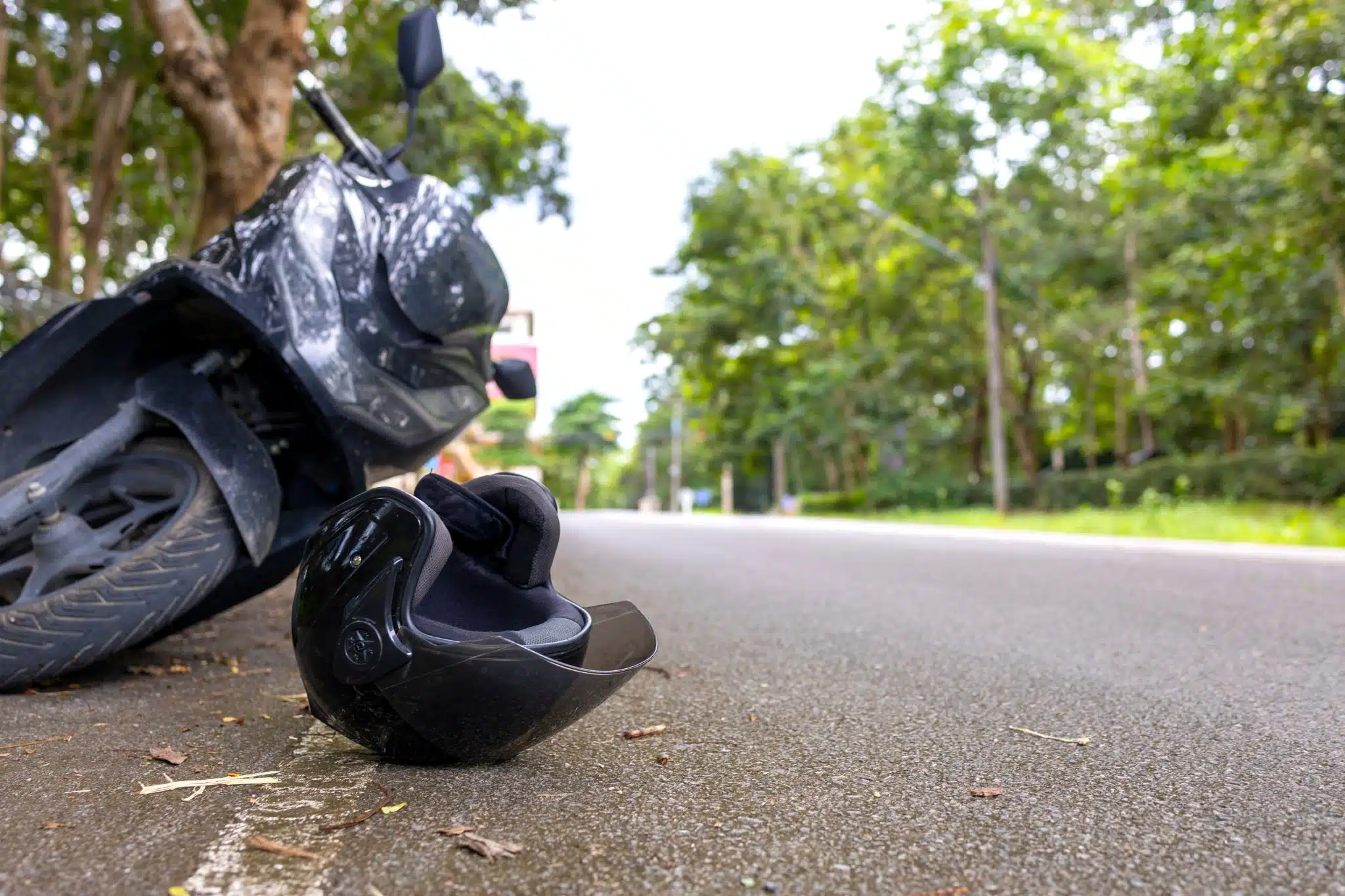
Pennsylvania operates under a partial helmet law, which creates confusion for even the most seasoned riders. The core of the law, found in Title 75 of the Pennsylvania Consolidated Statutes § 3525, is straightforward on its face: helmets are mandatory for all motorcycle operators and passengers under the age of 21. However, riders 21 and older are legally exempt from wearing a helmet if they meet one of two specific conditions: they have held a motorcycle license for at least two full calendar years, or they have completed a motorcycle safety course approved by PennDOT or the Motorcycle Safety Foundation.
While riding without a helmet may be a legal choice for many, it introduces serious challenges if a crash happens. Insurance companies frequently use a rider’s lack of a helmet to argue about fault and the value of a claim, even when their own driver was clearly negligent. This is where the nuances of the law affect your claim.
You still have rights and may pursue compensation even if you weren’t wearing a helmet. Pennsylvania’s laws on negligence are designed to allow for recovery as long as you are not found to be primarily at fault for the accident. The key is understanding how these two areas of law interact after a crash—with guidance from an experienced Philadelphia motorcycle accident lawyer.
If you have a question about a motorcycle accident and how helmet laws affect your injury claim, call us at (866) 771-4988. The Rothenberg Law Firm LLP is here to provide clarity and guidance.
Key Takeaways for Pennsylvania’s Motorcycle Helmet Laws
- Helmet use depends on age and experience. Riders under 21 must always wear a helmet, while those 21 and over are exempt only after holding a license for two full calendar years or completing a state-approved safety course.
- Not wearing a helmet does not bar your injury claim. Pennsylvania’s comparative negligence law allows you to recover damages as long as you are not found 51% or more at fault for the accident.
- Insurance companies will use your lack of a helmet against you. Expect the defense to argue that not wearing a helmet worsened your head injuries to reduce the compensation they owe, making experienced legal representation essential.
Who Is Legally Required to Wear a Helmet in Pennsylvania?
The confusion surrounding Pennsylvania’s helmet exemptions easily leads to unintentional violations. Many riders believe that turning 21 is the only requirement to legally ride without a helmet, but the law is more specific than that. Misunderstanding these details could not only lead to a traffic citation (which includes a base fine plus costs) but could also complicate an injury claim if you are in an accident.
To avoid these issues, it helps to have a clear breakdown of exactly who must wear a helmet and who is exempt.
Mandatory Helmet Use
The rules for mandatory helmet use apply without exception to the following groups:
- Riders and Passengers Under 21: Any person, whether they are operating the motorcycle or riding as a passenger, must wear a helmet if they are under 21 years of age.
- Learner’s Permit Holders: All individuals operating a motorcycle with a learner’s permit must wear a helmet, regardless of their age. A 55-year-old riding on a new permit is subject to the same helmet requirement as a 17-year-old.
The Specific Exemptions Explained
For riders 21 and older, the law provides two distinct pathways to being exempt from the helmet requirement. You only need to meet one of these criteria:
- Two or More Years of Licensure: You are exempt if you are 21 years of age or older and have been licensed to operate a motorcycle for at least two full calendar years. We will discuss the specific meaning of “full calendar years” later, as it is a frequent point of confusion.
- Completion of a Safety Course: You are also exempt if you are 21 or older and have successfully completed a motorcycle rider safety course approved by the Pennsylvania Department of Transportation (PennDOT) or the Motorcycle Safety Foundation (MSF).
What About Passengers and Autocycles?
The rules for passengers and specialized vehicles add another layer of detail:
- Passengers: A passenger who is 21 or older is only exempt if the motorcycle operator is also exempt. If the operator is required to wear a helmet (for example, they are under 21 or have a learner’s permit), then the passenger must also wear one, regardless of the passenger’s own age or riding experience.
- Three-Wheeled Vehicles (Autocycles): The law provides a specific exemption for operators and passengers of a three-wheeled motorcycle that is equipped with a completely enclosed cab. Vehicles like the Polaris Slingshot, which are registered as motorcycles but have car-like features, fall under this category, but only if they have that full enclosure.
Does Not Wearing a Helmet Affect My Injury Claim? (Comparative Negligence)
One of the most pressing questions riders have after a crash is, “I wasn’t wearing a helmet and got hit by another driver—did I lose my right to sue?” The answer is no, you did not.
However, the fact that you weren’t wearing a helmet, even if you were legally entitled to do so, adds a layer of complexity to your injury claim. This is due to a legal concept known as comparative negligence.
Pennsylvania follows a modified comparative fault system, which is defined in 42 Pa.C.S.A. § 7102. This rule allows you to recover damages from an at-fault party as long as a court does not find you to be 51% or more responsible for causing the accident. If you are found to be partially at fault, your final compensation award is simply reduced by that percentage. As long as your fault is 50% or less, you may still recover damages.
The Mitigation of Damages Argument
This is where the helmet issue comes into play. Even though the helmet statute itself states that failure to wear one is not negligence per se (meaning it’s not automatically considered negligence), insurance companies and their defense attorneys have a different strategy. They will argue that your decision not to wear a helmet contributed to the severity of your injuries, particularly head, neck, or brain injuries.
This is called an argument for the mitigation of damages. The defense isn’t necessarily claiming that your lack of a helmet caused the crash itself. Instead, they argue that you failed to take reasonable steps to protect yourself, and because of that, your injuries are worse than they would have been. Their goal is to convince a jury to assign a higher percentage of fault to you, thereby reducing the amount of money they have to pay.
The Burden of Proof is on the Defense
Remember that the burden is on the defense team to prove this connection. They must provide credible evidence showing that a helmet would have specifically prevented or lessened the injuries you sustained. For instance, they would have a very difficult time arguing that a lack of a helmet had any impact on a broken leg or a severe road rash injury. The argument is typically limited to injuries involving the head and neck.
Key Details: “Two Full Calendar Years” and Other Traps
The details of Pennsylvania’s helmet law contain a few nuances that trip up even careful riders. The most significant of these is the definition of “two full calendar years,” which is not what most people assume it means.
The “Calendar Year” Trap Explained
When the statute refers to “two full calendar years” of licensure, it is more strict than simply counting 24 months from the date you received your license. A calendar year runs from January 1 to December 31. Therefore, “two full calendar years” means you must have been licensed through two complete cycles of this period.
Here is a practical example:
- Let’s say you are over 21 and received your motorcycle license on June 15, 2023.
- You might think you are exempt 24 months later, on June 15, 2025. This is incorrect.
- The first “full calendar year” you complete is 2024 (from January 1 to December 31).
- The second “full calendar year” you complete is 2025.
- Therefore, your legal exemption to ride without a helmet would not begin until January 1, 2026.
This is a technicality that an insurance adjuster or defense attorney might try to use against you in court. Verifying your exact license date and calculating your eligibility based on this strict definition is a wise move before deciding to ride without a helmet.
The Safety Course Loophole
For newly licensed riders over 21 who don’t want to wait, the law provides an immediate path to exemption. By completing a PennDOT or MSF-approved safety course, you bypass the two-year waiting period entirely. This makes the safety course a popular option for riders who want the choice to ride without a helmet right away.
Don’t Forget About Eye Protection
Understand that the helmet law and the eye protection law are completely separate. Even if you are legally exempt from wearing a helmet, you are never exempt from the requirement to wear eye protection unless your motorcycle has a windscreen. Pennsylvania law mandates that all riders use some form of eye protection, such as glasses or goggles.
Equipment Standards: What Qualifies as a Legal Helmet?
When a helmet is legally required, not just any head covering will do. So-called novelty helmets that you might see for sale at rallies or online do not satisfy Pennsylvania’s legal requirements. To be compliant, a helmet must meet specific federal safety standards designed to provide meaningful protection in a crash.
FMVSS 218 Compliance is Mandatory
The key standard is the Federal Motor Vehicle Safety Standard (FMVSS) No. 218. This regulation, set by the Department of Transportation (DOT), establishes the minimum performance requirements for impact absorption, penetration resistance, and retention systems (chin straps). Helmets that meet this standard offer a scientifically tested level of protection.
How to Identify a Compliant Helmet
You identify a compliant helmet by looking for a few key features:
- The DOT Sticker: All helmets that meet FMVSS 218 must have a sticker on the outside back of the shell with the letters DOT. This symbol represents the manufacturer’s certification that the helmet meets the federal standard.
- Internal Labeling: In addition to the sticker, the helmet must have a permanent label on the inside that includes the manufacturer’s name, the helmet’s model, its size, and the month and year of manufacture.
- Substantial Construction: A compliant helmet will typically weigh around three pounds and have a thick inner liner made of polystyrene foam, usually about an inch thick. Novelty helmets are much lighter and often have little more than soft foam padding.
Debunking Myths About Helmets
Some riders express concern that helmets impair their senses. However, research and safety standards address these issues. A legal helmet is required to provide a field of vision of at least 210 degrees, which is far greater than the 120-degree field of vision required to get a license in Pennsylvania. Furthermore, studies have shown that helmets do not negatively impact a rider’s hearing; in fact, they reduce wind noise, making it easier to hear surrounding traffic.
Future Trends: The Push for Universal Helmet Laws (HB 1809)
Currently, Pennsylvania is in the minority of states with a partial helmet law. Many of its neighbors, including New York and Maryland, have universal laws that require all riders to wear helmets, regardless of age or experience.
In August 2025, House Bill 1809, also known as the Universal Motorcycle Helmet Safety Act, was introduced in the Pennsylvania legislature by Representative Manuel Guzman. The bill proposes to repeal the current age and experience-based exemptions, effectively making Pennsylvania a universal helmet law state once again, as it was prior to 2003. The proposed legislation is based on public health data suggesting universal laws reduce fatalities and traumatic brain injuries.
This bill has been referred to the Transportation Committee for review. While its future is uncertain, all riders should stay informed. If passed, such a law would significantly change a rider’s legal responsibilities and could also shift how liability is argued in personal injury cases moving forward.
FAQ for Pennsylvania Motorcycle Helmet Laws
If I cross into Pennsylvania from a state with a universal helmet law, do I need to wear one?
Only if you do not meet Pennsylvania’s specific exemption criteria. While you are on Pennsylvania roads, Pennsylvania law applies. If you are 21 or older and have either two years of riding experience or have completed an approved safety course, you are not required to wear a helmet.
Does a bicycle helmet count as protective headgear for a motorcycle?
Absolutely not. To be legal, a helmet must be specifically designed for motorcycle use and meet the Department of Transportation (DOT) FMVSS 218 standards.
Is the helmet fine a moving violation?
Generally, no. A citation for not wearing a helmet is a summary offense. While the total cost with fees is around $92, it does not typically add points to your driver’s license.
Can I sue for a traumatic brain injury (TBI) if I wasn’t wearing a helmet?
Yes, you may. However, the defense will almost certainly argue that your failure to wear a helmet contributed to the TBI, and they will try to reduce your compensation based on comparative negligence. You need experienced legal counsel to minimize this reduction and protect the value of your claim.
Protect Your Rights After a Pennsylvania Motorcycle Accident
Do not let an insurance adjuster tell you that your decision to ride without a helmet (provided it was your legal right to do so) forfeits your right to justice. The reality is that insurance companies will try to shift the focus away from their driver’s carelessness and onto your lack of gear.
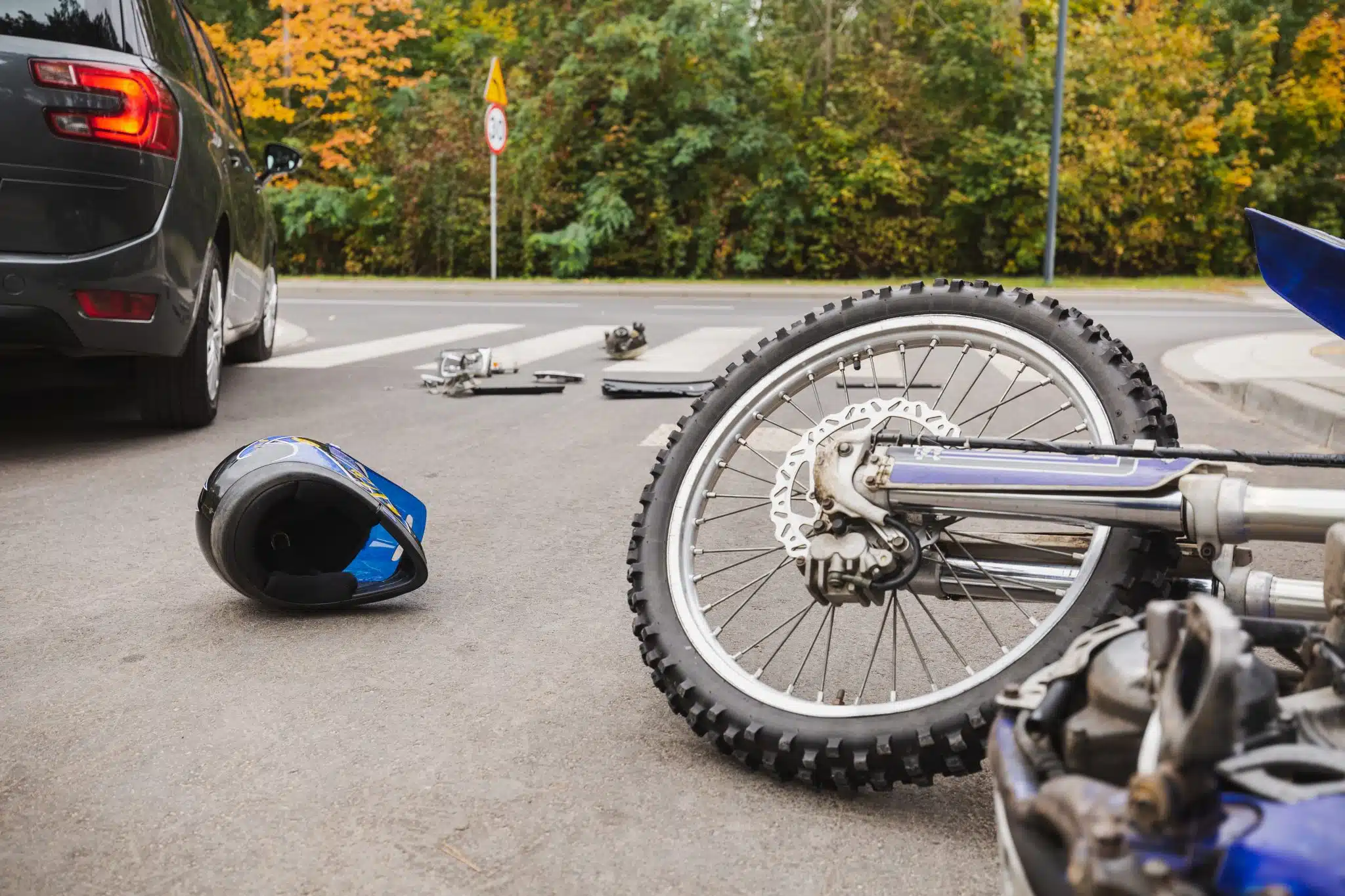
At The Rothenberg Law Firm LLP, we have years of experience countering the helmet defense both in negotiations and in the courtroom. We are prepared to build a strong case that holds the at-fault party responsible for their actions, with guidance from a trusted personal injury attorney in Pennsylvania.
Don’t face the insurance companies alone. Call us today for a free consultation to discuss your case strategy. Our team is ready to help at (866) 771-4988.