


When you’re hurt in a collision, the path to financial recovery is rarely simple. The situation grows far more complicated when the incident involves a commercial delivery vehicle. Unlike a crash with a private driver, there are liability challenges in delivery truck accidents in Center City Philadelphia.
The responsible party may not be just the person behind the wheel; it can extend to the powerful corporation that owns the truck, the company that loaded the cargo, or even a third-party logistics provider.
Successfully pursuing a claim requires a deep investigation into corporate structures and operational negligence. A personal injury lawyer can help uncover the actual cause of your injuries and identify every party that shares responsibility.
Key Takeaways for Delivery Truck Accidents in Center City Philadelphia
- Accidents involving commercial delivery trucks often involve multiple liable parties beyond just the driver.
- The delivery company itself may be held responsible for negligent hiring, inadequate training, or unrealistic delivery quotas.
- Federal and state regulations place specific duties on trucking companies, and violations of these rules can establish fault.
- Evidence from the truck’s black box, maintenance logs, and driver’s employment records helps build your case.
- An attorney investigates these complex corporate relationships to identify all potential sources of financial recovery.
Identifying All Defendants in a Delivery Truck Crash
The dense traffic and narrow streets of Philadelphia create a difficult environment for these large delivery trucks. An accident can involve a chain of corporate entities, each with its own insurance and legal team.
A primary hurdle in these cases is determining every person and company that contributed to the incident.
The Driver’s Role and Employment Status
The analysis starts with the driver, and a personal injury claim holds the person operating the truck accountable for their direct actions, such as speeding, distracted driving, or running a red light. However, the driver’s employment status immediately opens new avenues for liability.
Many delivery companies classify their drivers as independent contractors to avoid direct responsibility. If a company exerts substantial control over a driver’s work—such as dictating schedules, routes, or quotas—an employer-employee relationship may be established.
In such cases, the company could be held vicariously liable for any negligence on the part of the driver. Pinpointing this relationship is a foundational part of addressing the liability challenges in delivery truck accidents in Center City Philadelphia.
The Trucking Company’s Direct Negligence
Beyond vicarious liability, the delivery company itself may be directly negligent. This occurs when the company’s own careless actions or policies contribute to the crash. Proving corporate negligence is a different task than proving a driver’s mistake.
Common forms of direct corporate negligence include:
- Negligent Hiring: A company hires a driver with a known history of reckless driving or without a proper commercial license.
- Inadequate Training: The corporation fails to train drivers on safety procedures specific to operating large vehicles in dense urban areas like Old City or Rittenhouse Square.
- Poor Maintenance: The company fails to conduct regular inspections and repairs on its fleet, resulting in mechanical failures, such as brake failures or tire blowouts.
- Unrealistic Scheduling: The company imposes delivery quotas that pressure drivers to speed, skip rest breaks, and drive aggressively to meet deadlines.
Third-Party Contributors to the Crash
In some scenarios, other companies share the fault. For example, if improper loading by a third-party cargo company caused the truck to become unbalanced and tip over, that company may be held liable as a defendant.
A maintenance company that performed faulty repairs on the vehicle also bears responsibility. An investigation into these relationships reveals all potential defendants.
The Role of Corporate Policies and Safety Procedures
The internal policies of a delivery giant like Amazon, UPS, or FedEx can have a direct impact on public safety. These corporations create the systems within which their drivers operate. When those systems prioritize speed and profit over caution, people get hurt.
Investigating a company’s culture and practices reveals a great deal about its commitment to safety.
These details come from several sources, such as:
- Company Handbooks: These documents outline the official rules and procedures for drivers, which they may be encouraged to ignore in order to meet quotas.
- Internal Communications: Emails and memos may reveal a pattern of management encouraging drivers to violate safety rules, such as the federal Hours of Service regulations.
- Driver Testimonies: Current or former employees can provide firsthand accounts of a corporate culture that prioritizes faster deliveries over safety.
Your legal team gathers this evidence to show a jury how a corporation’s decisions in a boardroom led to your injuries on a Philadelphia street. The corporation’s choices matter just as much as the driver’s.
How Delivery Demands Affect Safety on City Center Streets
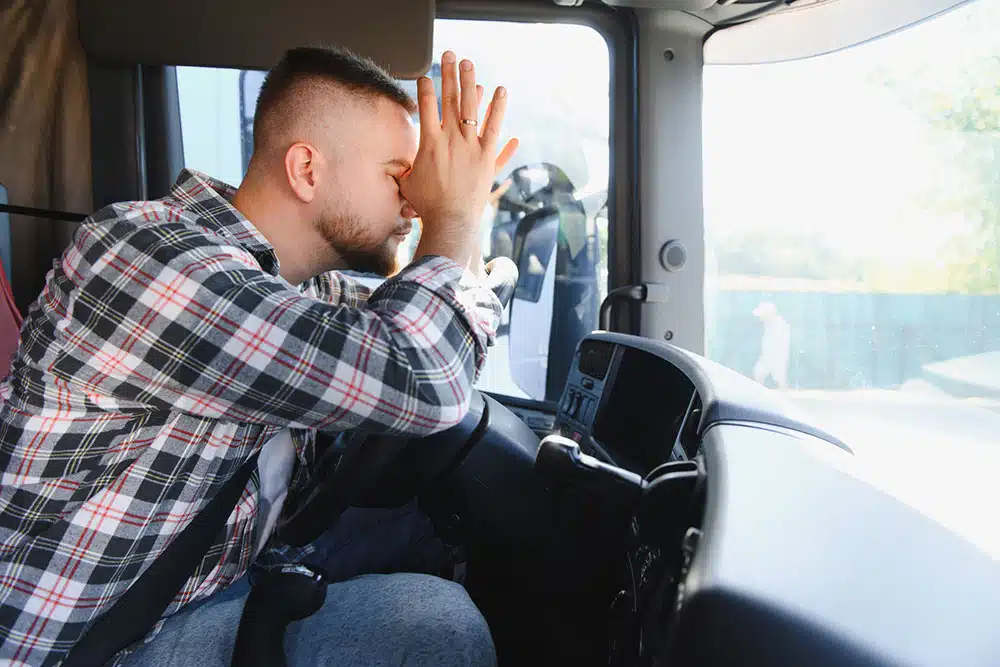
The rise of e-commerce has flooded our streets with delivery vehicles. In a congested area like Center City, this creates a dangerous environment. Companies compete for the fastest delivery times, resulting in intense pressure on drivers.
This pressure manifests in several dangerous ways:
- Speeding and Aggressive Driving: Drivers rush through intersections and change lanes abruptly to shave seconds off their delivery times.
- Illegal Parking: Delivery trucks often double-park on narrow streets, such as Sansom or Ludlow, obstructing traffic and creating blind spots for pedestrians and other drivers.
- Driver Fatigue: To complete their routes, drivers often work long hours without adequate rest, which can impair their judgment and reaction times.
- Distracted Driving: Drivers frequently use GPS devices and delivery scanners while the vehicle is in motion, taking their attention away from the road.
These behaviors aren’t just individual choices; they’re often a direct result of corporate policies that reward speed above all else. A successful claim connects these actions back to the company’s own directives.
When pursuing a claim, your attorney demonstrates how the demand for rapid delivery created the conditions for the accident to happen. This approach strengthens your claim by adding a layer of corporate accountability to the driver’s individual errors.
The Evidence That Builds Your Delivery Truck Accident Case
A strong claim relies on powerful evidence. In a commercial truck accident, the available evidence is often more extensive and technical than in a standard car crash case. Experienced legal teams know what to look for and how to get it before it disappears.
Key sources of evidence in these claims include:
- The Truck’s Black Box: Officially known as an Event Data Recorder (EDR), this device captures critical data about the truck’s speed, braking, and steering in the moments leading up to a crash.
- Electronic Logging Devices (ELDs): Federal law requires these devices to track a driver’s hours behind the wheel, which can prove violations of safety regulations designed to prevent fatigued driving.
- Maintenance Records: These logs indicate whether the company performed regular inspections and repairs, or if they allowed a vehicle with a dangerous defect to remain on the road.
- The Driver’s Personnel File: This file contains information about the driver’s training, driving history, and any past disciplinary actions related to safety.
- Dispatch and Delivery Records: These records reveal the delivery schedule and any communication between the driver and the company that may indicate pressure to rush.
- Dash Cam and Surveillance Footage: Video from the truck itself or from nearby businesses on streets like Walnut or Arch can provide objective proof of what happened.
Gathering and analyzing this evidence is a complex process, and companies are often reluctant to hand over information that exposes their fault. An experienced attorney uses legal tools like subpoenas and preservation letters to secure this evidence and build a fact-based argument.
How a Lawyer Helps You Overcome Liability Challenges in Delivery Truck Accidents
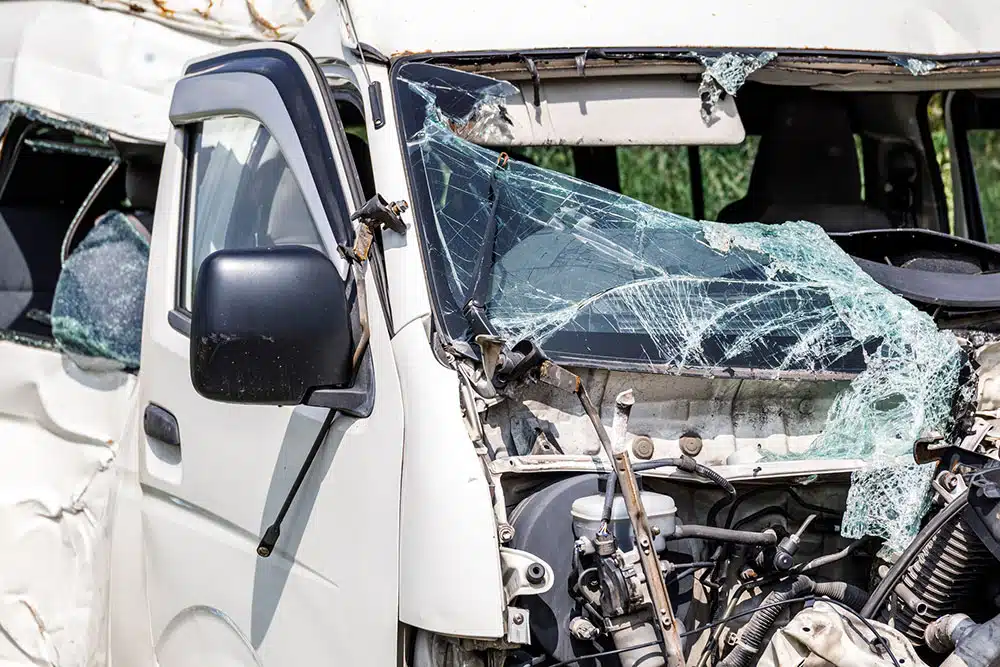
An attorney provides the resources and knowledge needed to confront large corporations and their insurance carriers. They handle every aspect of your claim, allowing you to focus on your recovery.
A personal injury lawyer takes specific actions to advance your case, such as:
- Immediate Investigation: Your attorney dispatches investigators to the scene, interviews witnesses, and documents evidence before it’s lost or destroyed.
- Evidence Preservation: They send legal notices to all potential defendants, ordering them to preserve crucial evidence, such as vehicle data, logbooks, and internal records.
- Identifying All Liable Parties: A lawyer researches corporate structures and contractual relationships to find every person and entity that shares fault for the crash.
Beyond pinpointing liability, your lawyer adds further value to your personal injury claim. They remove the pressure of dealing directly with corporate legal teams and their insurance adjusters, allowing you to direct your energy toward what matters most—your health.
Here are other ways a personal injury attorney can assist your claim:
- Managing Insurance Communications: Your lawyer handles all communication with insurance adjusters, protecting you from tactics they use to get you to accept a low settlement.
- Calculating Full Damages: They work with economic and medical professionals to determine the full extent of your financial losses, including future medical care and lost earning capacity.
- Expert Negotiations: Your attorney skillfully negotiates with insurance companies and opposing counsel to achieve the highest possible settlement without the need for a trial.
- Courtroom Representation: If a fair settlement cannot be reached, your legal team will vigorously represent your interests in court, presenting a strong case to a judge and jury.
FAQ for Liability Challenges in Delivery Truck Accidents in Center City Philadelphia
What if the Delivery Driver Is an Independent Contractor?
Many companies use the independent contractor defense to shield themselves from liability. However, an attorney can often challenge this by proving the company maintained significant control over the driver’s work.
If a court agrees that an employer-employee relationship existed, the company becomes responsible for the driver’s actions.
Who Is at Fault if a Mechanical Failure Caused the Crash?
If a mechanical failure, like faulty brakes, led to the accident, multiple parties may be at fault. The trucking company is responsible for regular maintenance; however, if a third-party repair shop performs shoddy work, that shop may be liable.
Additionally, if the part itself was defective from the start, the manufacturer may also be a defendant.
How Does an Attorney Get Evidence From a Large Delivery Company?
An attorney uses formal legal tools, such as a spoliation letter and a subpoena, to compel a company to preserve and turn over crucial evidence. This includes the truck’s black box data, driver qualification files, maintenance records, and internal communications.
These actions prevent the corporation from hiding or destroying information that proves your case.
Do Delivery Quotas Contribute to Accidents?
Unrealistic delivery quotas pressure drivers to speed, drive fatigued, and violate traffic laws. A legal claim can use evidence of these quotas to demonstrate that the company prioritized profits over safety. This helps establish direct negligence on the part of the corporation, not just the driver.
What Should I Do if the Company’s Insurer Contacts Me?
Don’t provide a recorded statement or sign any documents from an insurance company without first consulting an attorney. Insurance adjusters are trained to ask questions that can limit the value of your claim. A lawyer protects your rights by handling all communications for you.
Holding All Liable Parties Accountable
Holding the responsible parties accountable provides the financial resources you need to get the best medical care, replace lost income, and regain your quality of life. If you were injured in a collision with a delivery truck, you don’t have to face this fight on your own.
For more than 50 years, The Rothenberg Law Firm has fought for accident victims in Philadelphia. Call us at 1-800-624-8888 for a free consultation; we’re here 24/6 to help you move forward.