



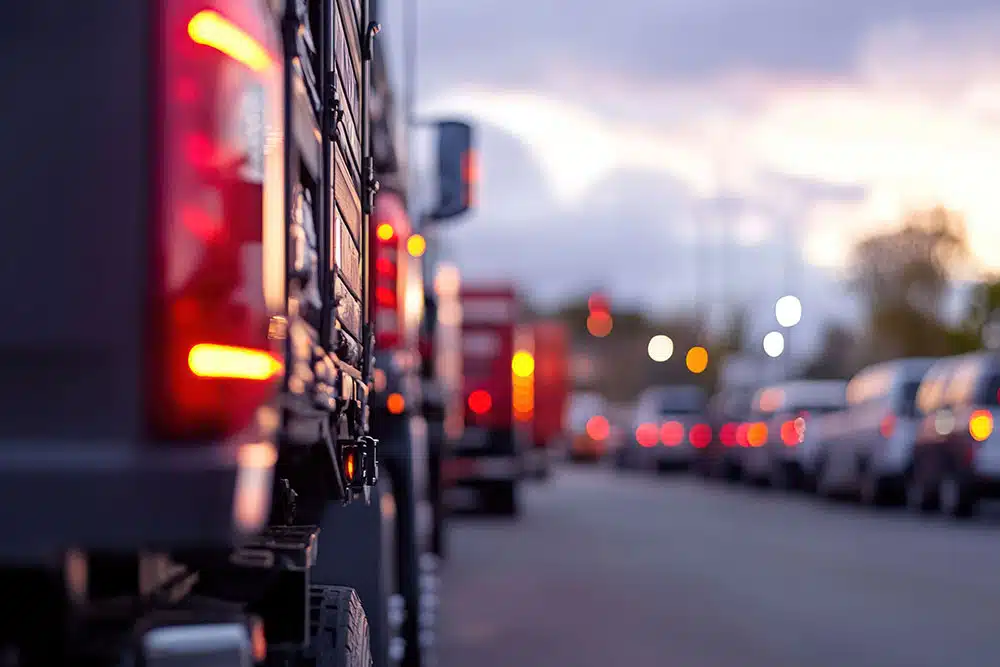
The increased crash risk from truck traffic around JFK Airport stems not just from the individual driver, but from the corporations legally responsible for their actions.
A crash here extends far beyond one driver’s error on the road; it involves a complex system of federal regulations, corporate policies, and rapidly disappearing evidence.
The sheer volume of cargo vehicles, combined with tight deadlines and congested expressways, creates a unique environment where the responsibilities of trucking operators are greater than ever.
Collisions around JFK are rarely simple. They often involve logistics companies, cargo loaders, maintenance contractors, and national carriers, all of which are governed by strict federal laws.
Untangling the web of liability requires a thorough investigation into practices that prioritize profits over public safety.
Key Takeaways for Truck Traffic Around JFK Airport
- The area surrounding JFK Airport, including the Van Wyck Expressway and Belt Parkway, forces large trucks and smaller passenger cars into dangerously close quarters.
- Federal regulations impose strict limits on truck drivers’ hours of service; however, pressure to meet air cargo deadlines can lead to violations and driver fatigue.
- Liability for JFK cargo truck collisions can extend beyond the driver to the trucking company, the cargo owner, and even third-party maintenance crews.
- Evidence in a commercial truck accident claim, such as electronic logging devices and maintenance records, belongs to the trucking company, and you must take specific legal actions to preserve it.
- Trucking companies and their insurers deploy rapid response teams to accident scenes to build a defense, making a victim’s immediate access to legal counsel a key factor.
The Unique Dangers of JFK’s Commercial Vehicle Corridors
The roads feeding JFK Airport are a distinct ecosystem of traffic. Unlike typical city streets, they handle a disproportionate number of semi-trucks, cargo vans, and other commercial vehicles operating on tight schedules.
The Van Wyck Expressway Funnel Effect
The Van Wyck Expressway serves as a primary artery for JFK-bound freight. The road’s design often forces multiple lanes to merge, creating a funnel effect where massive trucks and smaller cars compete for limited space. This forces passenger vehicles into truckers’ significant blind spots.
An 80,000-pound tractor-trailer cannot maneuver or stop with the same agility as a car. When traffic suddenly slows, a truck driver following too closely or driving too fast for conditions has little room for error.
The constant pressure of ingress and egress from the airport service roads only complicates these traffic patterns, leading to sudden stops and unsafe lane changes.
The Belt Parkway presents another set of challenges. Its older design includes tight turns, short on-ramps, and narrow lanes that weren’t built to accommodate the volume or size of modern commercial trucks.
Drivers unfamiliar with the parkway’s unique layout may misjudge turns, causing their trailers to encroach on adjacent lanes.
These design flaws demand heightened awareness and caution from commercial drivers. A failure to adjust speed and position for the parkway’s challenging segments can lead directly to devastating sideswipe and rollover accidents.
Constant Pressure From Air Cargo Deadlines
JFK is one of the world’s busiest air cargo gateways. This creates a high-pressure environment where delivery deadlines are measured in hours, not days. Trucking companies and their drivers face immense financial pressure to move freight quickly, which can lead to dangerous shortcuts.
This pressure contributes directly to factors that cause collisions. It incentivizes speeding, aggressive driving, and violations of the federally mandated Hours of Service rules, which are designed to prevent driver fatigue.
When a company’s culture prioritizes speed over safety, every driver on the roads near JFK faces a greater threat. An investigation into a crash must explore whether corporate pressure played a role.
Why Commercial Truck Accidents Involve Complex Liability
After a typical car accident, you typically deal with the other driver and their insurance company. A commercial truck crash is far more complicated. The driver behind the wheel is often just one small part of a larger network of corporate entities.
A thorough investigation frequently reveals that multiple parties share fault for a single collision. Your legal team’s job is to identify every party whose negligence contributed to your injuries.
The liable parties may include:
- The Truck Driver: A truck driver is liable for the accident if they operated the vehicle in a negligent manner, such as by speeding, driving while distracted, or driving while fatigued.
- The Trucking Company: The trucking company holds responsibility when it fails to screen, train, or supervise its drivers, or when it encourages the violation of safety regulations.
- The Maintenance Provider: A third-party maintenance provider is at fault if it performed faulty repairs or failed to keep the truck in a safe, roadworthy condition.
- The Cargo Shipper or Loader: A separate business shares liability if it improperly loaded or secured cargo, which led to an imbalance or spill that caused the crash.
- The Truck Manufacturer: A manufacturer can be a defendant if the company designed or built the truck or one of its parts with a defect that contributed to the accident.
Determining who is responsible for a truck accident near an airport requires immediate action to secure evidence from all potential defendants. The law holds these commercial entities to a high standard of care because the damage their vehicles inflict is so severe.
Federal Regulations Trucking Companies Must Follow
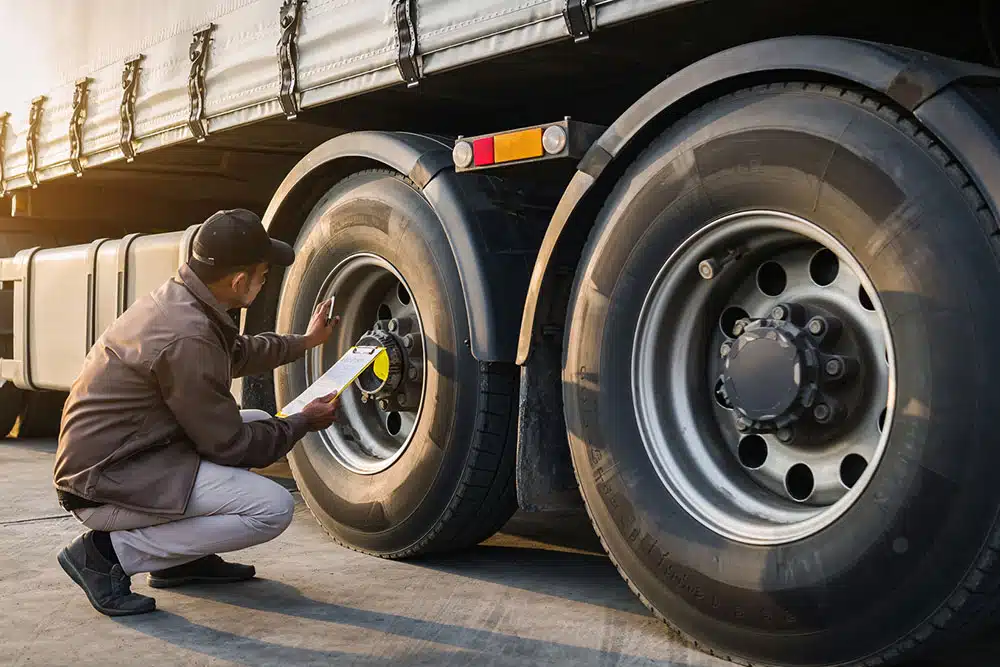
Federal Motor Carrier Safety Regulations (FMCSA) provide a detailed rulebook for the trucking industry. These are not suggestions; they’re the minimum safety standards required by law.
When commercial truck crashes occur in Queens, investigators often find that a violation of these federal rules was a root cause. Companies that cut corners on compliance put everyone at risk.
A trucking company’s duties under the law include the following:
- Hours of Service: Drivers must adhere to strict limits on the duration of their driving and on-duty periods before taking a mandatory rest break.
- Vehicle Inspections: Companies must perform regular, thorough inspections and maintenance on their tractors and trailers to identify and repair any safety defects.
- Driver Qualifications: Motor carriers must conduct background checks and ensure their drivers are properly licensed, trained, and medically qualified to operate a commercial vehicle.
- Cargo Securement: Freight must be properly loaded, balanced, and secured to prevent it from shifting or spilling during transit.
- Drug and Alcohol Testing: Companies must implement and enforce strict drug and alcohol testing programs for all drivers.
These regulations exist for one reason: to prevent accidents. A failure to comply with any of them serves as powerful evidence of negligence. A detailed investigation uncovers where these failures occurred and who was responsible for them.
Common Causes of Truck Accidents in Heavy Traffic
In the dense truck traffic around JFK, certain types of driver error and mechanical failure appear again and again. While every accident is unique, many stem from a handful of common negligent acts.
Unsafe Lane Changes and Blind Spots
A fully loaded tractor-trailer has significant blind spots, or “no-zones,” on all four sides. Federal regulations require drivers to use their mirrors and properly position themselves to account for these areas.
In the chaotic, multi-lane environment of the Van Wyck Expressway, an impatient or poorly trained trucker who makes an unsafe lane change can easily crush a smaller vehicle that was hidden in their blind spot.
Driver Fatigue
The pressure to deliver air freight on time leads many drivers to push past their physical limits. The FMCSA’s Hours of Service rules are designed to combat this very issue.
A fatigued driver exhibits slower reaction times, impaired judgment, and a reduced ability to respond to changing road conditions. Investigations into a driver’s electronic logs, fuel receipts, and dispatch instructions often reveal a pattern of driving that makes fatigue-related accidents almost inevitable.
Improper Maintenance and Equipment Failure
Trucks operating in the stop-and-go traffic around JFK place immense strain on their mechanical systems, especially brakes and tires. A trucking company’s duty to inspect and maintain its fleet is non-negotiable.
Some catastrophic collisions result from equipment failures that a proper pre-trip inspection would have caught.
Common mechanical failures that lead to accidents include:
- Brake Failure: Worn or poorly maintained brakes can fail under pressure, robbing an 80,000-pound vehicle of its ability to stop.
- Tire Blowouts: Old, worn, or underinflated tires are prone to blowouts, which can cause a driver to lose control of the truck.
- Steering or Suspension Failure: A mechanical failure in the steering or suspension system can make the vehicle impossible to control, especially on curved roadways like the Belt Parkway.
- Defective Lighting: Burned-out headlights, taillights, or turn signals make a truck less visible to other drivers, particularly at night or in bad weather.
How a Lawyer Helps With Your JFK Truck Accident Claim
Handling a claim against a commercial trucking company isn’t a straightforward process. These corporations and their insurance carriers have vast resources and aggressive legal teams dedicated to minimizing payouts.
A truck accident lawyer counters manages every aspect of your case so you can focus on your recovery.
A law firm helps your claim by performing several crucial functions:
- Evidence Preservation: Your lawyer immediately sends official spoliation letters to the trucking company, legally demanding that they preserve vital evidence. This includes the driver’s electronic logs, the truck’s black box data, maintenance records, and driver qualification files.
- In-Depth Investigation: Your legal team launches a private investigation to determine the actual cause of the crash. This involves obtaining the police report, interviewing witnesses, and hiring accident reconstruction experts to analyze the physics of the collision.
- Expert Engagement: A firm retains industry experts, such as professional engineers and logistics specialists, to provide testimony on industry standards in the trucking sector.
- Liability Determination: Your representative reviews all evidence to identify every single party whose negligence played a role.
- Full Damage Calculation: An attorney works with you, your doctors, and economic experts to calculate the full extent of your damages. This goes beyond current medical bills to include future medical needs, lost earning capacity, and the personal impact of your injuries.
- All Insurer Communications: Once you retain counsel, all communication from insurance adjusters must go through your lawyer. Your lawyer negotiates for a just settlement with the insurer and can take your case to the courtroom if necessary.
FAQ for How Truck Traffic Around JFK Airport Increases Crash Risk
How Does a Lawyer Prove a Trucking Company’s Negligence Caused My Crash?
To prove negligence, your legal team must show that the trucking company violated a duty of care and that this violation directly led to your injuries. This involves gathering evidence like driver logs, maintenance records, or the driver’s employment file.
What Types of Evidence Help My Truck Accident Case?
Crucial evidence includes the truck’s electronic data recorder (the black box), which tracks speed and braking data, and the driver’s electronic logging device (ELD), which records their driving hours.
Other vital pieces of evidence are the post-crash inspection reports, the company’s maintenance records for the specific tractor and trailer, the driver’s qualification file, and any communication between the driver and the dispatcher around the time of the crash.
Why Is an Accident Near JFK Airport Different From Other Crashes?
An accident near a major airport, such as JFK, is different due to the unique combination of factors present. These include an extremely high volume of commercial traffic, intense pressure from air cargo deadlines, and complex roadway systems not always designed for modern trucks.
Liability is also more complex, often involving international shipping companies, freight forwarders, and other entities specific to the air cargo industry.
What Is the Filing Deadline for a JFK Truck Accident Claim?
Generally, New York law gives you three years from the date of a truck accident to file a lawsuit for your injuries. If you miss this critical deadline, you permanently lose the right to pursue financial compensation in court.
However, a critical exception exists for claims against government agencies. If a truck owned by a city, state, or federal entity caused your injuries, you must file a formal Notice of Claim much sooner, often within just 90 days of the accident.
An attorney’s immediate investigation identifies the truck’s owner to ensure you comply with the correct and strict filing deadline for your specific case.
New York’s pure comparative negligence rule allows you to pursue a claim even if you’re partially responsible for the accident. A court determines the percentage of fault for each party involved, and your assigned percentage then reduces your final financial recovery.
Your legal team works to minimize any finding of fault against you by focusing its investigation on the extensive negligence of the commercial operators.
Charting Your Path Forward
Taking action to hold a negligent trucking company accountable is the first step toward closing this chapter and moving forward with the resources you need. With over 50 years of experience fighting for injury victims, The Rothenberg Law Firm has obtained billions of dollars for our clients.
We know how to investigate complex truck accident cases and stand up to powerful insurance companies. If you were injured in a collision, contact The Rothenberg Law Firm at 1-800-624-8888 for a free consultation.