


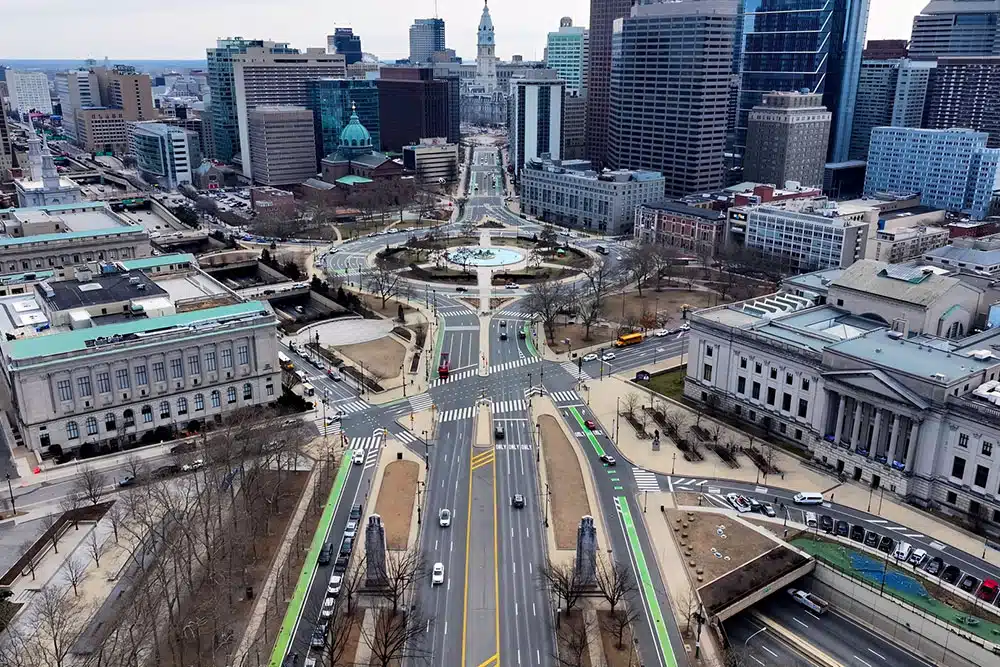
State and city safety agencies consistently identify a handful of corridors as the most hazardous in Philadelphia, with Roosevelt Boulevard frequently topping the list. Analyzing the factors that make these locations so treacherous reveals the full scope of Philadelphia’s most dangerous intersections for car crashes in 2025.
These locations often share common traits, such as high traffic volume, complex designs, and a mix of vehicle and pedestrian activity.
Key Takeaways for Philadelphia’s Most Dangerous Intersections
- Philadelphia County consistently reports one of the highest numbers of traffic crashes and fatalities in Pennsylvania.
- Roosevelt Boulevard, particularly its intersections at Red Lion Road and Grant Avenue, remains one of the most hazardous roadways in the entire country.
- Many of the city’s high-risk intersections are monitored by red-light cameras, which can provide evidence in a car accident claim.
- Poor road design, high traffic volume, and aggressive driving behaviors are primary factors contributing to intersection accidents.
The City’s Vision Zero Action Plan
Philadelphia has adopted the Vision Zero initiative, a city-wide strategy aimed at eliminating all traffic-related deaths and severe injuries by 2030. This program operates on the fundamental belief that traffic fatalities aren’t inevitable accidents but preventable crashes.
The city’s action plan focuses on making systemic changes to street design, traffic enforcement, and public education to create a safer transportation network for everyone.
A central element of this strategy is the High Injury Network; city officials analyzed crash data and determined that only 12% of Philadelphia streets saw 80% of all serious and fatal crashes.
Philadelphia’s most dangerous intersections for car crashes in 2025 fall directly within this High Injury Network.
These locations are the primary focus of the city’s ongoing efforts to engineer safer roadways for drivers, pedestrians, and cyclists alike.
Broad Street and Old York Road
The junction where Broad Street, Old York Road, and Stenton Avenue converge in North Philadelphia—commonly known as the “Five Points Intersection”—is one of the city’s most complex and confusing crossings.
Unlike a standard four-way intersection, its five-legged layout forces drivers to manage traffic from multiple, sharply angled approaches. This unusual geometry often leads to hesitation and misjudgment of right-of-way.
The intersection’s configuration contributes to a high frequency of angle collisions and sideswipes, particularly during turning movements. Pedestrians face additional hazards from long, multi-stage crosswalks that expose them to several lanes of turning and through traffic.
Its consistent appearance in city and PennDOT safety studies, including the Vision Zero Capital Plan 2025, underscores its status as one of Philadelphia’s most dangerous intersections for vehicle crashes and pedestrian injuries.
Allegheny Avenue and Sedgley Avenue
Located near the border of the Allegheny West and Fairhill neighborhoods, the intersection of Allegheny and Sedgley Avenues is another notoriously dangerous five-point crossing. The streets meet at sharp, awkward angles, creating significant blind spots and poor sightlines.
The intersection’s layout challenges even the most careful drivers, as it disrupts normal traffic flow and expectations. Conflicting vehicle paths and tricky left turns are common problems.
The confusion generated by this design has solidified its reputation as a trouble spot, leading to frequent collisions.
Roosevelt Boulevard and Red Lion Road
This sprawling intersection in Northeast Philadelphia has long been recognized as one of the most hazardous in the country. It forces drivers to navigate a massive twelve-lane design that combines high-speed express lanes with local service roads.
This layout creates numerous points where vehicles merge, turn, and cross paths, often at very different speeds. The intersection’s design presents a unique set of challenges. Its well-documented history of serious collisions led the city to install one of its first red-light camera systems here.
Key risk factors at this crossing include:
- Complex Design: The twelve-lane configuration, along with its accompanying service roads, creates multiple points where vehicle paths can unexpectedly cross.
- High Speeds: Even with the recent push to slow down traffic, the express lanes encourage speeds that make it difficult for drivers to react to sudden stops or merging vehicles from the local lanes.
- Heavy Traffic Volume: A constant flow of commuter and commercial vehicles increases the likelihood of a collision at any given time.
Roosevelt Boulevard and Grant Avenue
Located in Northeast Philadelphia, the junction of Roosevelt Boulevard and Grant Avenue is one of the city’s most hazardous intersections. The roadway transitions into a wide twelve-lane surface arterial at this point, combining express and local lanes.
This intersection exhibits the same kind of high-conflict design found at the nearby Roosevelt Boulevard & Red Lion Road crossing: long crossings, multiple vehicular movement streams, and elevated risk for angle (T-bone) and merging crashes.
The intersection’s complexity and high traffic volume mean that even a small error in judgment can result in a serious or fatal collision.
Recognizing the danger, the city installed one of Philadelphia’s first red-light camera systems here in 2005; it’s also included in broader corridor safety initiatives, including automated speed enforcement and signal/geometry redesign.
Nonetheless, the fundamental structural challenges continue to make it a high-priority site for crash prevention.
Broad Street and Olney Avenue
The intersection of Broad Street and Olney Avenue in North Philadelphia stands out as both a critical transportation hub and a persistent safety concern. Anchored by the Olney Transportation Center, it funnels thousands of SEPTA bus riders, Broad Street Line commuters, pedestrians, and drivers through the same space every day.
This constant movement of people and vehicles creates a chaotic environment where even minor errors can have serious consequences. City crash data consistently identify Broad & Olney as a pedestrian-injury hotspot within the Philadelphia Vision Zero High Injury Network.
The intersection’s high traffic volume, multiple turning lanes, and heavy foot traffic make it one of the most hazardous crossings for pedestrians in North Philadelphia.
The City’s ongoing safety initiatives — including automated speed enforcement and corridor-wide signal upgrades — aim to reduce these risks, but the area remains one that demands heightened caution from all road users.
Bustleton Avenue and Cottman Avenue
Situated near the Roosevelt Mall in Northeast Philadelphia, the intersection of Bustleton and Cottman Avenues is another site with a troubling safety record. The area’s heavy commercial activity generates significant vehicle traffic and a high volume of pedestrians moving between stores.
Safety advocates point to the road’s design as a primary contributor to accidents. It functions as a stroad, a dangerous hybrid of a high-speed road and a local street that fails to accommodate either cars or pedestrians safely.
34th Street and Grays Ferry Avenue
The crossing at 34th Street and Grays Ferry Avenue presents unique challenges due to its location near the Schuylkill Expressway and the Grays Ferry Avenue Bridge. The intersection handles a complex mix of local traffic, highway-bound commuters, and vehicles crossing the bridge.
Confusing lane configurations and complicated traffic signal patterns contribute to driver error. Its history of serious accidents, including hit-and-runs, prompted the city to install red-light cameras here.
How Road Design and Driver Behavior Contribute to Intersection Crashes
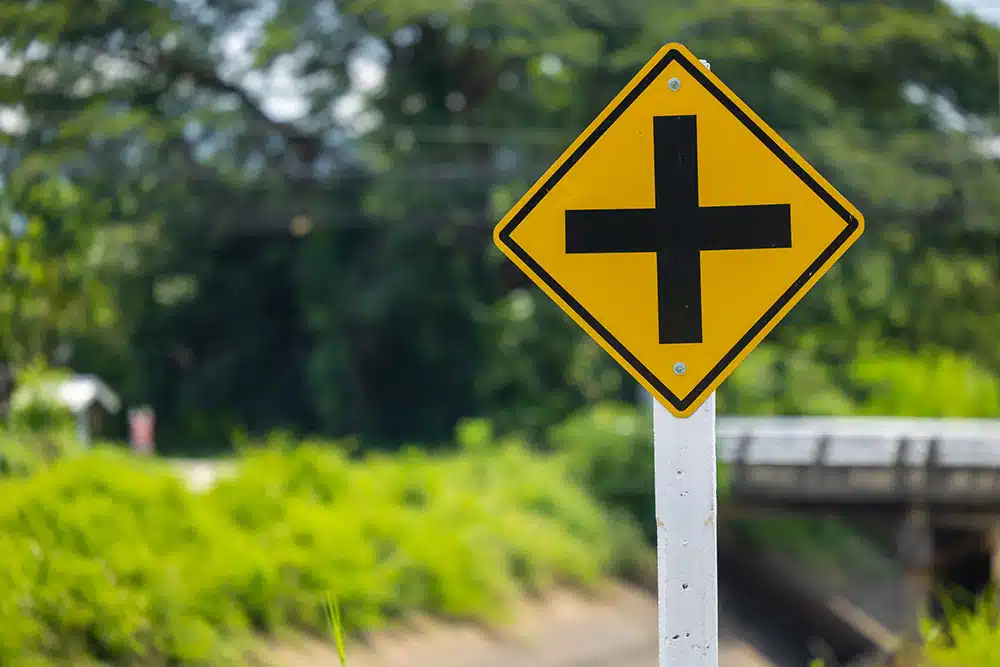
The physical characteristics of an intersection often play a direct role in the frequency and severity of collisions. At many of Philadelphia’s most dangerous intersections for car crashes in 2025, outdated or flawed design creates inherent risks for drivers.
An effective legal claim often involves analyzing how these design elements contributed to a collision.
Common intersection dangers include:
- Poor Visibility: Buildings, trees, or parked vehicles may obstruct a driver’s line of sight, making it difficult to see oncoming traffic or pedestrians.
- Complex Lane Configurations: Multi-lane roads with confusing turn lanes or service roads, like those on Roosevelt Boulevard, can lead to driver uncertainty and last-second maneuvers.
- Inadequate Signage or Signals: Worn-out lane markings, improperly timed traffic lights, or missing signs can fail to provide drivers with clear guidance.
- Heavy Pedestrian Traffic: Intersections near shopping centers, schools, or public transit hubs, such as those on Market Street or Broad Street, combine vulnerable pedestrians with vehicle traffic, thereby increasing risks.
While road design sets the stage, driver behavior is the leading cause of intersection accidents. A successful claim hinges on proving that another party acted negligently.
Common examples of negligent driving at intersections include:
- Distracted Driving: A driver using a phone, adjusting a GPS, or attending to something else in the car can fail to notice a red light or oncoming traffic.
- Speeding: Exceeding the speed limit reduces a driver’s reaction time and increases the force of impact, turning a minor crash into a severe one.
- Aggressive Driving: Drivers who tailgate, make unsafe lane changes, or try to beat a red light create dangerous situations for everyone.
- Driving Under the Influence: Alcohol or drugs impair a driver’s judgment, coordination, and ability to operate a vehicle safely.
6 Steps To Take After a Car Crash in Philadelphia
After you have received medical care and are recovering at home, certain actions can protect your health and your ability to file a successful injury claim.
These steps help you document your recovery and organize the information needed for your case:
- Follow Your Doctor’s Treatment Plan: Attend all follow-up appointments, physical therapy sessions, and specialist visits. Following medical advice demonstrates that you’re taking your recovery seriously and creates a clear record of your injuries.
- Keep Detailed Records: Create a file to store all accident-related documents. This includes medical bills, receipts for prescriptions, letters from insurance companies, and any other paperwork you receive.
- Document Your Experience: Keep a simple journal to track your pain levels, physical limitations, and how your injuries affect your daily activities. This personal record provides a human element to the medical records.
- Preserve Evidence: Keep the clothes you were wearing in the accident. Don’t repair your vehicle until your attorney has had a chance to have it inspected and photographed.
- Avoid Social Media: Don’t post about the accident, your injuries, or your recovery on social media platforms. Insurance companies can take your words or pictures out of context to challenge the severity of your injuries.
- Contact an Attorney: Let a Philadelphia car accident lawyer handle all communication with insurance companies for you. They’ll investigate the crash, negotiate with the insurer, and manage the legal process while you focus on healing.
FAQ for Philadelphia’s Most Dangerous Intersections for Car Crashes in 2025
What Evidence Helps Prove Fault if There Was No Traffic Camera Footage?
Even without official red-light camera footage, your attorney can build a strong case by uncovering other key evidence. Your lawyer can canvass nearby businesses to secure private security camera footage that may have captured the crash.
Witness testimony from other drivers, pedestrians, or passengers also provides a crucial, objective account of the events. A detailed police report contains the investigating officer’s initial findings, diagrams, and notes on the contributing factors that led to the crash.
Who Is at Fault in a Left-Turn Accident at an Intersection?
In Pennsylvania, the driver making a left turn usually has the duty to yield to oncoming traffic. In many cases, the turning driver is found at fault for a collision. However, exceptions exist.
If the oncoming driver was speeding, ran a red light, or was otherwise negligent, that driver may be partially or entirely at fault. An investigation of the crash evidence helps determine who’s liable.
What if I Am Partially at Fault for the Accident?
Pennsylvania follows a modified comparative negligence rule, which allows you to recover damages as long as you’re not found to be 51% or more responsible for the accident. However, your percentage of fault reduces the amount of compensation you receive.
How Long Do I Have To File a Car Accident Lawsuit in Philadelphia?
In Pennsylvania, the statute of limitations for filing a personal injury lawsuit is generally two years from the date of the accident. Some exceptions can alter this deadline, so speak with an attorney well before this deadline approaches to preserve your right to file a claim.
What if the Other Driver Was Uninsured or Fled the Scene?
If an uninsured or hit-and-run driver injures you, you may still have options for compensation. You may be able to file a claim through your own insurance policy’s Uninsured/Underinsured Motorist (UM/UIM) coverage.
This coverage protects you in these specific situations. Your attorney can help you understand your policy and assist you in pursuing a claim.
Your Trusted Philadelphia Car Accident Lawyers
Taking legal action after a collision at one of Philadelphia’s most dangerous intersections isn’t about reliving the event but constructing the secure future you and your family need. At The Rothenberg Law Firm, we work to put those building blocks in place for you. To begin building your path forward, call us for a free consultation at 1-800-624-8888.