


The rules that govern right-of-way in Manhattan crosswalks, such as Broadway, or near crowded areas like Union Square, become critically important after a pedestrian accident. Pursuing a claim for compensation requires a clear-eyed approach and a solid grasp of your legal position.
New York law details specific responsibilities for motorists approaching crosswalks. When a driver fails to yield, the consequences for a pedestrian can be severe, leading to significant physical and financial hardship.
Key Takeaways for Right-of-Way in Manhattan Crosswalks
- In New York, drivers are required to yield the right-of-way to pedestrians in a crosswalk when there are no traffic signals.
- Even with a green light, drivers must exercise due care to avoid hitting pedestrians within the crosswalk.
- The concept of comparative negligence may reduce a pedestrian’s compensation if they’re found partially at fault for the collision.
- Evidence from the scene, including police reports and witness statements, plays a huge part in proving who had the right-of-way.
- An experienced attorney analyzes the specifics of your accident to build a strong case for maximum compensation.
The Foundation of a Pedestrian Accident Claim
After a pedestrian accident in a busy neighborhood like the Financial District or the Upper West Side, you need to establish who was at fault. New York’s rules for the right-of-way in Manhattan crosswalks set the expectations for both drivers and pedestrians at intersections and other designated crossing points.
A strong Manhattan pedestrian accident claim requires showing that the driver breached their duty of care. NYC crosswalk laws for pedestrians provide a framework for determining when a driver’s actions constitute negligence.
Successfully holding a driver accountable means gathering sufficient proof. A lawyer helps assemble evidence that clearly shows the driver’s failure to yield to a pedestrian in NYC.
This work builds the case for why the driver, and by extension their insurance company, is financially responsible for the harm you have suffered. Your claim connects the driver’s actions directly to your injuries and financial losses.
How New York’s Vehicle and Traffic Law Applies
New York law contains the specific statutes that govern interactions between vehicles and pedestrians. These laws aren’t merely suggestions; they’re mandatory rules that all drivers must adhere to.
The law creates a clear expectation that drivers will actively look for and yield to people on foot under specific circumstances.
Marked vs. Unmarked Crosswalks
Manhattan has both marked and unmarked crosswalks, and the law protects pedestrians in both. Marked crosswalks use painted lines to show where people should cross. Unmarked crosswalks exist at any intersection where two roads meet at approximately right angles, even without painted lines on the pavement. A driver’s duty to yield applies equally in these locations.
The distinction between them sometimes creates confusion for both drivers and pedestrians. Drivers may incorrectly assume they don’t need to stop at an intersection without painted lines.
However, New York defines these areas as legal crosswalks. An accident at an unmarked crosswalk in a neighborhood like Greenwich Village still triggers the same legal protections.
The Impact of Traffic Signals
Traffic signals add another layer to the rules of the road. Pedestrians facing a “WALK” signal or a walking person symbol have the right of way. They may proceed across the roadway, and all drivers must yield to them.
When the signal shows a flashing “DON’T WALK” sign or a red hand, a pedestrian may not start to cross, but anyone already in the crosswalk can continue to the other side safely.
A driver who proceeds into an intersection and hits a pedestrian who legally entered the crosswalk can be held negligent. A lawyer will investigate the timing of the traffic signals at the time of the collision.
Common Scenarios in Manhattan Crosswalk Accidents
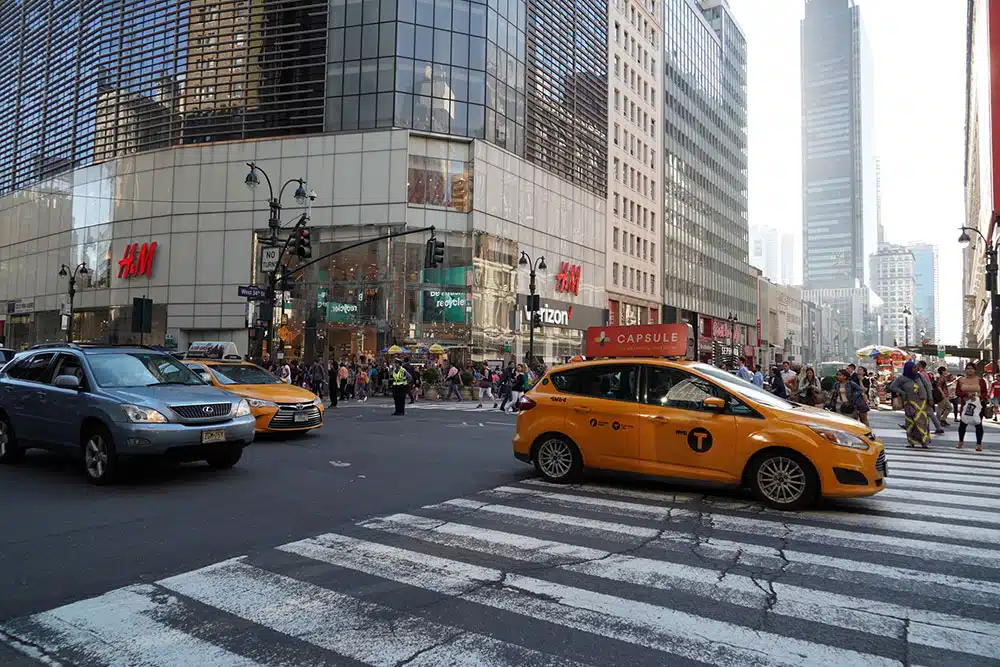
Pedestrian accidents occur for various reasons, but a few scenarios are prevalent in Manhattan. These situations often involve a clear failure to respect the pedestrian’s right of way. An attorney evaluates the facts of your incident to determine the specific type of negligence that occurred.
Common collision types include:
- Left-Turn Accidents: A driver making a left turn focuses on oncoming traffic and fails to see a pedestrian in the crosswalk. The driver then turns directly into the pedestrian’s path. These are especially common on wide avenues, such as Park Avenue or Sixth Avenue.
- Distracted Driving: A motorist who is texting, talking on the phone, or adjusting their GPS fails to notice a person crossing the street. Their inattention leads to a dangerous failure to yield to a pedestrian in NYC.
- Speeding To Make a Light: A driver accelerates to get through an intersection before the light turns red. This aggressive maneuver can result in a collision with a pedestrian who has just entered the crosswalk with a “WALK” signal.
- Failure To Stop: At intersections with stop signs or in unmarked crosswalks, drivers sometimes fail to come to a complete stop. They may roll through the intersection, not seeing the person on foot until it’s too late.
Establishing Proof in Your Pedestrian Claim
A successful claim depends on strong evidence. Simply stating that the driver was at fault is not enough. You must present facts and documentation that support your version of events and demonstrate the driver’s negligence.
An attorney knows what kind of evidence makes a difference and how to obtain it. Your legal team will gather information to build a solid case and create a detailed picture of the moments leading up to the accident and the harm that followed.
Here are some types of evidence a lawyer may use:
- Police Accident Report: This report often contains the investigating officer’s initial assessment of the accident, diagrams of the scene, and statements from those involved.
- Witness Statements: Eyewitnesses can provide an unbiased account of what they saw. Their testimony can corroborate your story and dispute the driver’s claims.
- Video Footage: Many intersections in areas like Times Square or near Penn Station are equipped with traffic or security cameras that may have captured the incident.
- Medical Records: Your medical files document the extent of your injuries. These records link the accident directly to the physical harm you experienced.
What Is Comparative Negligence in New York?
In some pedestrian accident cases, the driver’s insurance company may argue that the pedestrian shares some of the blame. New York follows a pure comparative negligence rule, which means if you’re found partially responsible, your percentage of fault reduces your potential compensation.
A skilled attorney challenges false allegations of fault forcefully. They work to minimize any percentage of fault assigned to you and protect your ability to recover full compensation.
Don’t let the fear of a comparative negligence argument deter you from pursuing a claim. Even if you believe you might have been partially at fault, you may still have a valid case. An attorney can help you analyze the specifics of the incident.
Potential Compensation in a Pedestrian Claim
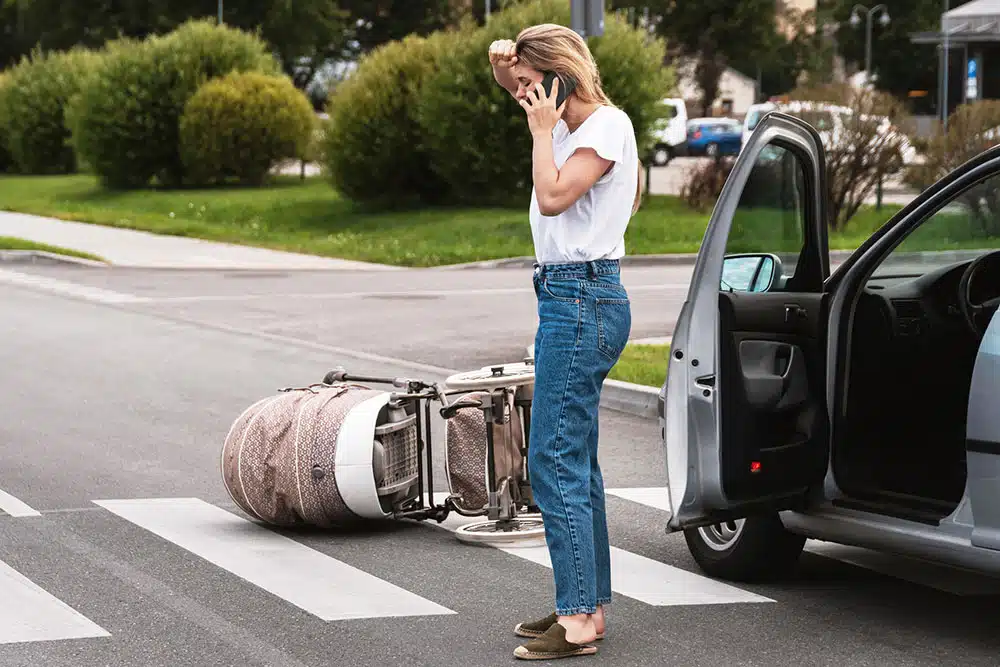
If a driver failed to yield the right-of-way in a Manhattan crosswalk and injured you, you can seek compensation for a wide range of losses. These losses, referred to as damages, fall into two primary categories: economic and non-economic.
An attorney helps you calculate the full value of your claim by identifying all the ways the accident has affected your life. Economic damages represent your direct financial losses and include bills, receipts, and other financial documents.
Non-economic damages cover the non-financial harm you experienced. These losses are more subjective but just as real. They compensate you for the physical pain, emotional distress, and diminished quality of life resulting from your injuries.
Common damages may include:
- Medical Expenses: A settlement can cover all costs related to your treatment, from the initial ambulance ride and hospital stay to future physical therapy or surgery.
- Lost Wages: You may receive compensation for the income you lost while unable to work during your recovery.
- Loss of Earning Capacity: A claim can include payment for the reduction in your ability to earn a living in the future if your injuries are permanent.
- Pain and Suffering: The law allows you to seek compensation for the physical pain and discomfort caused by your injuries.
- Emotional Distress: This compensation addresses the anxiety, depression, or post-traumatic stress you experience after the accident.
- Loss of Enjoyment of Life: Your claim seeks payment for your inability to participate in hobbies and activities you once enjoyed.
How a Personal Injury Lawyer Helps Your Pedestrian Accident Case
After you’re hurt in a pedestrian accident, facing an insurance company alone can be a real challenge. A personal injury lawyer handles the entire legal process on your behalf.
Their work lets you focus on your physical recovery while they fight to protect your legal rights and secure the compensation you need.
A lawyer’s assistance includes:
- Investigation: Your attorney conducts a full investigation into the accident to gather all available evidence to show the driver’s negligence.
- Communication: Your lawyer handles all communications with the driver’s insurance company, so you don’t have to deal with adjusters trying to get you to settle for less.
- Valuation: They accurately calculate the full value of your claim, including both economic and non-economic damages, to make sure you demand a fair amount.
- Negotiation: Your pedestrian accident lawyer negotiates aggressively with the insurance company to reach a settlement agreement that fully compensates you for your losses.
- Litigation: If the insurance company refuses to make a fair offer, your attorney can file a lawsuit and represent you in court to pursue a just outcome.
FAQ for Right-of-Way in Manhattan Crosswalks
Should I Speak to the Driver’s Insurance Company?
It’s generally best to avoid speaking directly with the at-fault driver’s insurance adjuster. Insurance companies often aim to settle claims for the lowest possible amount.
An adjuster may try to get you to provide a recorded statement that they can later use to downplay your injuries or argue you were partially at fault for the accident. You can politely decline to speak with them and direct them to contact your attorney.
Who Has the Right of Way in an Unmarked Crosswalk in NYC?
In New York City, pedestrians have the right of way in unmarked crosswalks. An unmarked crosswalk is located at any intersection of roadways, and drivers must yield to pedestrians who are crossing at these locations.
What if the Driver Who Caused My Accident Fled the Scene?
You still have options for financial recovery even if the driver who hit you fled the scene. New York law provides a safety net for victims of hit-and-run accidents. Your own car insurance policy’s Uninsured Motorist (UM) coverage can provide compensation for your injuries.
If you don’t have car insurance, you may be covered by a policy belonging to a household family member. If no household policy is available, you may be eligible to file a claim with the Motor Vehicle Accident Indemnification Corporation (MVAIC), a state fund that protects pedestrians.
How Long Do I Have To File a Pedestrian Accident Claim in New York?
In New York, you generally have three years from the date of the accident to file a personal injury lawsuit. However, this deadline, known as the statute of limitations, can be much shorter in certain situations.
For example, if your claim involves a government entity, such as a city-operated bus or vehicle, you must typically file a Notice of Claim within 90 days of the incident.
Missing these deadlines can prevent you from ever recovering compensation, making it imperative to discuss your case with a lawyer promptly.
Do I Need a Manhattan Pedestrian Accident Lawyer if I Was Hit in a Crosswalk?
Hiring a personal injury lawyer after being hit in a crosswalk provides you with a strong advocate in the fight for compensation. An attorney handles the complex legal and insurance processes, freeing you up to focus on healing.
Your attorney will investigate your claim, negotiate with insurers, and prepare your case for trial, all to maximize your financial recovery.
Protecting Your Future
After a pedestrian accident, the single most important principle to guide you is protecting your future stability. Every action you take—or don’t take—affects your ability to recover physically and financially. Get an experienced Manhattan pedestrian accident lawyer on your side today.
You have the right to hold the at-fault driver accountable for their actions, and a dedicated legal team can help you. For a free consultation to discuss your case, contact The Rothenberg Law Firm at 1-800-624-8888.