When a tractor-trailer's brakes fail on the Cross Bronx Expressway or a tire blows out on the BQE, the driver and trucking company are not always the only parties responsible. If a defective truck part caused your New York City crash, you may be able to pursue a product liability lawsuit against the manufacturer for your injuries and losses.
These claims operate under different legal rules than standard negligence cases. They can name defendants you might not expect, such as Freightliner, Kenworth, Peterbilt, Volvo, or the companies that made the brakes, tires, or steering components.
Truck manufacturers and the companies that make truck components have a duty to produce safe products. When they fail, injured victims have the right to hold them accountable regardless of whether the truck driver made any mistakes.
At the Rothenberg Law Firm, our New York City truck accident lawyers have years of experience uncovering commercial vehicle defects, identifying every liable party, and pursuing claims that dramatically increase the total recovery for our clients.
Why Defective Truck Parts Change Everything About Your Case
- Product liability claims can hold manufacturers responsible even when the truck driver did nothing wrong.
- New York law recognizes three legal theories in product liability claims: manufacturing defects, design defects, and failure to warn.
- Pursuing both negligence and product liability claims can significantly increase total compensation.
- Major truck manufacturers and component suppliers carry substantial insurance policies for injury claims.
- Evidence preservation is critical to your case. Your lawyer can secure the truck and its parts before repairs destroy proof.
Can You Sue a Truck Manufacturer After an Accident in New York?
The short answer: Yes, if a defective component contributed to your crash. New York product liability law allows injured individuals to sue manufacturers when their products cause harm, even without proving negligence.
Unlike negligence claims against the driver, product liability claims focus on whether the truck or its parts were unreasonably dangerous. Your attorney does not need to prove the manufacturer was careless, only that the product was defective and caused your truck accident injuries.
This legal theory is called strict liability. It exists because manufacturers are in the best position to prevent defects and should bear responsibility when dangerous products reach consumers.
The distinction is essential because it opens an additional path to compensation in some truck accident cases. Even if the trucking company has limited insurance, manufacturers like Volvo Trucks and Freightliner carry substantial policies designed to cover catastrophic injury claims.
What Are the Three Types of Product Defects Under New York Law?
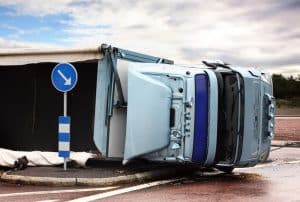
New York recognizes three distinct theories of product liability. Each addresses a different way a product can be dangerously flawed. Your personal injury lawyer will investigate which applies to your case and may pursue more than one.
Manufacturing Defects
A manufacturing defect occurs when something goes wrong during production. The design was sound, but this specific unit left the factory flawed. A brake caliper with a hairline crack or a tire with improperly cured rubber would qualify.
These cases compare the defective product to identical units that were manufactured correctly. The difference between them is the defect that caused your injuries.
Design Defects
A design defect means the entire product line is inherently dangerous. Every unit has the same flaw because the blueprint itself was unreasonably hazardous. A steering system prone to failure under normal operating conditions would qualify.
Design defect claims often affect many vehicles. When your lawyer identifies a design flaw, records from similar crashes may strengthen your case.
Failure to Warn
Manufacturers must provide adequate warnings about known risks. If a component requires specific maintenance to prevent failure, and the manufacturer did not communicate this clearly, a failure-to-warn claim may apply.
These truck accident claims also arise when manufacturers learn of dangers after sale but fail to issue recalls or warnings. National Highway Traffic Safety Administration (NHTSA) recall data often provides evidence for failure-to-warn cases.
Your attorney will work with engineers and accident reconstruction experts to determine which theory or combination of theories fits your case and offers the strongest path to recovery.
Which Truck Components Most Often Cause Accidents?
The NHTSA tracks defect investigations and recalls for commercial vehicles. Certain components appear repeatedly in crash investigations in New York City and across the United States.
Commercial trucks have thousands of parts that must function correctly at highway speeds. When any critical component fails, the consequences on crowded New York City highways can be severe for other motorists.
Brake System Failures
Air brake malfunctions, worn brake drums, and faulty automatic slack adjusters can leave an 80,000-pound truck unable to stop. Commercial trucks rely on complex braking systems that must function perfectly under extreme conditions.
When brakes fail on steep grades like those approaching the George Washington Bridge or the hills of Staten Island, catastrophic collisions follow. A fully loaded truck needs significantly more stopping distance than a passenger car.
Tire Blowouts
Defective tires can separate or blow out without warning. A front tire blowout or a tire tread separation often causes the driver to lose steering control entirely. Rear tire failures can send debris across multiple lanes of traffic.
Debris from failed truck tires on highways like the Long Island Expressway and I-95 creates secondary hazards for other motorists. These accidents often involve multiple vehicles.
Steering System Defects
A steering shaft separation or power steering failure can make a truck impossible to control. These failures often occur without warning, giving the driver no chance to react.
Volvo Trucks recalled nearly 20,000 vehicles in recent years for a steering shaft defect that could cause sudden, complete loss of steering ability. The Federal Motor Carrier Safety Administration (FMCSA) ordered the affected trucks off the road immediately.
Underride Guard Failures
Rear and side underride guards are designed to prevent smaller vehicles from sliding beneath trailers. These guards can mean the difference between a survivable collision and a fatal one.
When underride guards fail or are inadequately designed, occupants of passenger cars face devastating injuries. Some manufacturers have been criticized for using guards that meet minimum federal standards but fail in real-world crashes.
A lawyer experienced in truck accident litigation knows how to preserve and examine these components before evidence disappears.
NHTSA maintains public databases of recalls and defect investigations. Your attorney can search these records to determine if other crashes have involved the same component.
Who Can Be Held Liable in a Defective Truck Parts Case?
Product liability claims can reach multiple defendants throughout the supply chain. Unlike negligence claims focused on the driver, these claims target everyone involved in manufacturing and distributing the defective component.
Your attorney will identify every party whose conduct contributed to your injuries. This investigation often reveals defendants the victim never considered.
Potentially liable parties include:
- Truck manufacturers like Freightliner, Kenworth, Peterbilt, Mack, and Volvo Trucks
- Component manufacturers who made the brakes, tires, steering systems, or other parts
- Parts distributors and retailers in the commercial supply chain
- Trucking companies that failed to maintain equipment or ignored recall notices
- Maintenance and repair facilities that performed deficient work on the vehicle
Naming multiple defendants increases the pool of available insurance coverage. This strategy often leads to significantly higher settlements for seriously injured clients.
Your lawyer will trace the defective component back through the supply chain and identify every entity that may bear responsibility for your injuries.
When Should You Pursue Both Negligence and Product Liability Claims?

A standard truck accident lawsuit targets the driver's negligence and the trucking company's responsibility. Adding a product liability claim if a defective part caused or contributed to your accident creates a separate avenue to compensation with different legal requirements.
Many truck accident victims do not realize they have claims against manufacturers. A thorough investigation by your lawyer might reveal defects that would otherwise go undetected.
Pursuing both types of claims offers several advantages:
- Access to manufacturer insurance policies that may exceed trucking company coverage
- Protection if the negligence claim faces obstacles like comparative fault arguments
- Leverage in settlement negotiations when defendants face multiple theories of liability
- The ability to hold all responsible parties accountable, not just the most obvious ones
Your attorney will evaluate both paths and build the strongest possible case based on the facts of your accident. This comprehensive approach maximizes your chances of securing full and fair compensation.
What Is the Deadline to File a Defective Truck Parts Lawsuit in New York?
New York generally allows three years from the date of injury to file a personal injury lawsuit. This statute of limitations (CPLR § 214) applies to both negligence and product liability claims arising from truck accidents.
However, the practical deadline is much shorter. Critical evidence, including the truck itself, electronic data, and maintenance records, can disappear within days. Trucking companies repair damaged vehicles quickly. Data recorders are overwritten with new information.
Federal regulations require trucking companies to preserve certain records, but many records fall outside these requirements. The defective component itself may be discarded during repairs.
Contact a lawyer immediately after a serious truck accident. Your attorney can send preservation letters and take legal steps to secure evidence before it vanishes.
What Evidence Do Lawyers Gather in Defective Truck Part Cases?
Building a product liability case requires technical evidence that proves the defect existed and caused the truck crash. Speculation is not enough—your lawyer needs concrete proof.
Your attorney will work with engineers, metallurgists, and accident reconstruction experts to gather and analyze this material.
Key evidence includes:
- The defective component itself, preserved before repair or disposal
- Electronic control module (ECM) data showing speed, braking, and other parameters
- Maintenance and inspection records from the trucking company
- NHTSA recall notices and defect investigations involving the component
- Expert analysis from mechanical engineers and accident reconstructionists
This evidence-gathering process begins immediately. Delays can result in lost data and compromised physical evidence that would otherwise prove your case.
Your lawyer may seek a court order to preserve the truck and prevent repairs. Time is critical in these situations.
FAQs About Defective Truck Parts Lawsuits in New York City
What if the truck driver was also negligent?
You can pursue claims against both the driver and the manufacturer. Multiple defendants being at fault does not reduce your right to compensation but increases the sources of recovery. Your lawyer will identify all liable parties and pursue claims against each one.
How do I know if a defect caused my accident?
You do not need to know this before contacting a lawyer. Attorneys work with engineers and accident reconstruction experts who examine the wreckage, analyze electronic data, and determine what failed. Their findings guide the legal strategy your attorney develops.
Can truck brake failure lead to a product liability claim in New York?
Yes. If a truck crash happens because of brake failure, you may have a product liability claim in New York. A NYC product liability lawyer can investigate whether a defective brake part, poor manufacturing, or faulty maintenance contributed to the collision and pursue compensation from responsible companies.
Can a defective tire lead to a truck accident lawsuit in NYC?
Yes. If a truck crash in New York City involves a defective tire, you may have a lawsuit against the tire manufacturer or other responsible parties. A lawyer can investigate the tire failure, review maintenance records, and pursue compensation for injuries and losses
Can I sue if the truck was not properly maintained?
Yes, but this may be a negligence claim against the trucking company rather than a product liability claim. If poor maintenance caused a non-defective part to fail, the trucking company bears responsibility. Your lawyer can pursue both theories depending on what the evidence reveals.
What if the trucking company already repaired the truck?
Repairs can destroy evidence, but cases may still proceed. Maintenance records, photographs, police reports, and electronic data may survive. Your lawyer can also argue that the trucking company's destruction of evidence should count against them in court.
Are product liability cases more complicated than standard truck accident claims?
Accidents involving semi-truck defects require additional technical knowledge of experts, but a law firm experienced in truck accident litigation handles these complex demands routinely. The potential for substantially higher compensation often justifies the additional effort and expense involved in these cases.
Injured by a Defective Truck in New York City? Call Today for a Free Consultation

A semi truck crash caused by faulty brakes or a blown tire in New York City demands a team of experienced truck accident lawyers who know how to investigate mechanical failures and hold manufacturers accountable. These cases require immediate action. Evidence disappears quickly, and every day shortens your timeline for taking legal action. The Rothenberg Law Firm has fought for seriously injured New Yorkers for over 50 years. Contact us today for a free consultation.