A distracted driving crash often leaves more than visible injuries. Pain, medical appointments, missed work, and deep worry about what comes next weigh heavily on families across New York. When a driver chose a phone over the road and caused harm, questions about accountability and state law naturally follow.
New York's cell phone and texting while driving laws explained clearly show when phone use breaks the law and how those violations matter after a serious accident. A knowledgeable attorney plays a key role in gathering proof, dealing with insurers, and protecting your interests.
If you suffered injuries or losses because a distracted driving caused a wreck, reach out to a distracted driving accident attorney near you for a free consultation to learn what steps make sense next.
Key Takeaways: New York's Cell Phone and Texting Laws
- New York bans handheld cell phone use and texting while driving under specific sections of the Vehicle and Traffic Law.
- Police can issue citations based on observed phone use, and violations carry fines, points, and possible added penalties.
- Phone use violations often support civil claims after crashes by helping show driver fault.
- Evidence such as phone records, witness accounts, and video footage often plays a major role.
- New York’s no-fault system affects claims, but serious injuries allow injured people to pursue claims against at-fault drivers.
What Are New York's Cell Phone and Texting While Driving Laws?
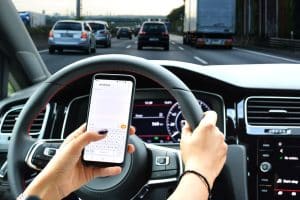
New York lawmakers addressed distracted driving by passing clear rules that limit handheld device use behind the wheel. These laws focus on driver behavior rather than intent, which means officers look at what a driver did, not why they did it.
Vehicle and Traffic Law Section 1225-c
Section 1225-c targets texting and similar activities. The statute bars drivers from composing, sending, reading, or accessing text-based communications while driving. Text-based communications include emails, instant messages, and social media messages. A driver stopped at a traffic light or in traffic still counts as driving under this law.
Vehicle and Traffic Law Section 1225-d
Section 1225-d covers handheld mobile phone use. The law prohibits holding a phone to talk, listen, or access apps while operating a motor vehicle. Officers may stop a driver solely for this violation because New York treats it as a primary offense.
What Counts as a Portable Electronic Device?
State law uses broad language to cover many devices. Courts and police typically treat the following as portable electronic devices:
- Cell phones: Smartphones and basic mobile phones used for calls, texts, or apps.
- Tablets: Devices used for messaging, browsing, or video.
- Laptops: Portable computers used while driving.
- Personal digital assistants: Older or specialized handheld devices that send or receive data.
Hands-Free Device Exceptions
Drivers may use hands-free systems that allow voice operation without holding the device. Bluetooth systems, dashboard-mounted devices, and voice commands fall within this exception. Drivers still carry responsibility for paying attention to the road, even when hands-free use stays legal.
What Are the Penalties for Violating New York's Distracted Driving Laws?
Penalties aim to discourage risky behavior and promote safer roads. New York increases consequences for repeat violations within a set time frame, encouraging drivers to avoid distracted driving and make safer choices behind the wheel.
First Offense Penalties
A first handheld phone or texting offense usually brings a fine ranging from $50 to $200, plus a mandatory state surcharge. The violation also adds points to the driver’s record.
Second Offense Within 18 Months
A second violation within 18 months leads to higher fines, often between $50 and $250, along with the surcharge. Points increase, which raises the risk of license suspension.
Third and Subsequent Offenses
Three or more violations within 18 months result in steeper fines, reaching up to $450. Accumulated points may trigger license suspension or revocation, depending on the driver’s record.
Additional Penalties for Commercial Drivers
Commercial drivers face stricter standards. Federal rules and state law restrict phone use more heavily for drivers operating commercial motor vehicles. Violations may threaten a commercial driver’s license and employment.
Points on Your Driving Record
Most handheld phone and texting violations add five points to a driver’s record. New York’s point system tracks violations over time. Too many points within 18 months can lead to suspension, fines, and required driving courses.
Are There Enhanced Penalties in Work Zones or School Zones?
Certain locations receive added protection because of increased risk to workers and children.
Work Zone Violations
Phone use violations in work zones often result in higher fines. Construction workers face serious danger from distracted drivers, so lawmakers added extra deterrents in these areas.
School Zone Violations
School zones also bring enhanced penalties. Drivers passing through areas with children present must remain alert, and phone use in these zones often carries higher fines and closer scrutiny.
Can You Be Held Liable for an Accident Caused by Distracted Driving?
Traffic tickets punish violations, but civil claims focus on harm caused to others. Distracted driving frequently plays a major role in personal injury lawsuits.
Civil Liability vs. Criminal Penalties
Criminal or traffic penalties punish wrongdoing against the state. Civil liability addresses losses suffered by injured people. A driver may face fines and points while also owing payment for medical bills, lost income, and other losses tied to the crash.
Proving Distracted Driving in a Personal Injury Case
Plaintiffs must show that phone use contributed to the crash. Evidence often links distraction to delayed reaction times, lane drift, or failure to stop. Courts look at whether the driver acted reasonably under the circumstances.
Damages Available to Injured Victims
Injury claims often seek payment for measurable losses and personal harm. These damages may include medical expenses, rehabilitation costs, lost wages, reduced earning ability, and non-economic harm such as pain or loss of enjoyment of daily activities.
What Evidence Can Prove a Driver Was Using a Cell Phone?
Evidence often makes or breaks a distracted driving case. Attorneys focus on gathering reliable proof that connects phone use to the collision.
Cell Phone Records and Subpoenas
Phone records show call times, data use, and message activity. Personal injury attorneys may request these records through subpoenas during litigation. Timing often matters, especially when records show activity moments before impact.
Witness Testimony
Passengers, other drivers, or pedestrians sometimes notice phone use before a crash. Their statements may describe a driver looking down, holding a phone, or failing to react to traffic signals.
Police Reports and Citations
Police reports often note observed phone use or driver admissions. A citation for violating Section 1225-c or 1225-d strengthens an injured person’s claim by documenting unlawful behavior.
Surveillance and Dashboard Camera Footage
Traffic cameras, business surveillance systems, and dash cams frequently capture crashes or moments leading up to them. Video footage may show a driver holding a device or drifting out of a lane.
Accident Reconstruction Analysis
Reconstruction professionals study vehicle damage, skid marks, and timing. Their analysis may show delayed braking or steering consistent with distraction rather than mechanical failure or road conditions.
How Does Distracted Driving Compare to Other Forms of Negligence?
Courts often compare distracted driving to other risky behaviors to evaluate fault and damages.
Distracted Driving vs. Drunk Driving
Both behaviors reduce reaction time and awareness. While alcohol impairment involves chemical effects, distraction involves diverted attention. Courts treat both as serious breaches of driver responsibility.
Establishing Negligence in New York Courts
Negligence requires showing duty, breach, causation, and damages. Drivers owe others a duty to operate vehicles safely. Phone use while driving often shows a breach of that duty when it contributes to a crash.
Impact on Insurance Claims
Insurance adjusters examine fault when evaluating claims. Evidence of distracted driving may lead insurers to assign greater responsibility to the at-fault driver, which affects settlement discussions.
What Should You Do if You're Injured by a Distracted Driver?
Steps taken early often affect the strength of a claim later. Prompt action helps preserve evidence and protect your position.
Immediate Steps at the Accident Scene
After ensuring safety and seeking medical care, gather basic information. Photos of vehicles, road conditions, and visible injuries help document what happened.
Documenting Your Injuries
Medical records create a timeline linking injuries to the crash. Follow-up care, therapy notes, and prescriptions all help show the extent of harm.
Notifying Insurance Companies
Most policies require prompt notice of a crash. Provide basic facts without guessing or speculating about fault. Detailed statements often wait until legal guidance becomes available.
Preserving Evidence of Cell Phone Use
Ask witnesses for contact information. Note any statements made by the other driver about phone use. Avoid deleting photos, messages, or other records related to the crash.
The Importance of Legal Representation
An attorney coordinates evidence collection, communicates with insurers, and prepares claims. Legal guidance often reduces stress and helps avoid missteps during early stages of a case.
Does New York Follow a No-Fault Insurance System?
New York’s no-fault system affects how injury claims proceed after car accidents.
How No-Fault Insurance Works
No-fault insurance pays for basic economic losses regardless of fault. Medical expenses and a portion of lost wages often fall under personal injury protection, known as PIP.
When You Can Step Outside No-Fault
Serious injuries allow injured people to pursue claims against at-fault drivers. This option opens the door to seeking payment beyond basic economic losses.
Serious Injury Threshold Requirements
State law defines serious injury using categories such as fractures, significant disfigurement, permanent limitations, or substantial disability lasting at least 90 days. Meeting this threshold allows a lawsuit against the responsible driver.
How Rothenberg Law Firm LLP Can Help
After a distracted driving crash, clear guidance and steady support make a real difference. Our team at Rothenberg Law Firm LLP focuses on protecting injured New Yorkers and holding careless drivers accountable.
Investigating the Distracted Driving Claim
We begin by looking closely at how the crash happened. Our car accident attorneys review police reports, scene photos, and witness statements. When appropriate, we pursue cell phone records and other digital evidence to show whether phone use played a role.
Gathering and Organizing Evidence
Strong claims rely on clear documentation. We collect medical records, employment information, and billing statements to show how the injuries affected your health and daily life. Careful organization helps present a full picture of losses tied to the collision.
Handling Insurance Company Communications
Insurance companies often try to limit payouts or shift blame. Our firm manages all communication with adjusters and defense attorneys. This approach protects you from pressure and reduces the risk of statements taken out of context.
Advocating Through Settlement or Trial
Some cases resolve through negotiation, while others require court involvement because insurers or at-fault drivers refuse reasonable responsibility. Our attorneys prepare every case as if trial may occur, which often strengthens negotiating positions and supports fair resolutions based on evidence.
Frequently Asked Questions About Cell Phones/Texting Behind the Wheel
Can I use my phone at a red light in New York?
No. New York law treats stopped vehicles in traffic as driving. Holding or texting on a phone at a red light violates the law.
What happens if I get caught texting while driving as a new driver?
New drivers face stricter consequences. A texting violation may lead to license suspension, especially for drivers under probationary status.
Can police officers check my phone after pulling me over?
Officers generally need consent, a warrant, or another legal basis to search a phone. A traffic stop alone does not grant automatic access to phone contents.
Does hands-free calling count as distracted driving in New York?
Hands-free calling remains legal under state law. However, drivers still must maintain attention to the road and surroundings.
How long do I have to file a lawsuit against a distracted driver in New York?
Most personal injury lawsuits must begin within three years from the crash date. Claims involving public entities often carry shorter deadlines.
Let Our Distracted Driving Accident Attorneys in NY Help

Time matters after a distracted driving crash. Evidence fades, witnesses move, and deadlines approach quickly. Rothenberg Law Firm LLP offers dedicated advocacy built on careful investigation and clear communication.
Our team understands how phone use violations affect liability and insurance disputes. Reaching out promptly helps protect your claim and preserve key evidence. Contact our distracted driving accident attorneys in New York for a free consultation.