Philadelphia’s streets have changed with the rise of Uber and Lyft. In neighborhoods like Center City, University City, and South Street, rideshare drivers move constantly between pickups, drop-offs, and new ride requests, often relying on apps for navigation, communication, and timing.
That constant interaction with a screen can pull attention away from the road at the worst possible moment. For pedestrians crossing busy intersections or cyclists sharing narrow lanes, a split-second distraction can lead to serious collisions.
If you were hit and injured by an Uber or Lyft driver in Philadelphia, you likely have questions about your legal options. The answers generally depend on what the driver was doing at the time of the crash and how Pennsylvania law applies to rideshare companies.
Rideshare collisions that result in injuries involve complex insurance policies and legal issues. A Philadelphia rideshare accident lawyer can help you identify the available insurance coverage and pursue compensation for your injuries.
What Injured Pedestrians and Cyclists Need to Know About Rideshare Accidents
- Uber and Lyft carry up to $1 million in liability coverage when their drivers are actively transporting passengers or en route to a pickup.
- Coverage drops significantly when the driver has the app on but has not yet accepted a ride, with limits of $50,000 per person and $100,000 per accident in Pennsylvania.
- Pennsylvania's two-year statute of limitations applies to rideshare accident claims, so acting quickly is critical.
- Pedestrians and cyclists may file claims against the rideshare company's insurance, the driver's personal policy, or both, depending on the circumstances.
- A rideshare accident lawyer can identify all available insurance sources, gather evidence, and handle communications with adjusters on your behalf.
Is Uber or Lyft Responsible If Their Driver Hits a Pedestrian or Cyclist?

It depends on the driver's status in the app at the time of the crash. Uber and Lyft provide substantial insurance coverage when their drivers are on their way to pick up a passenger or actively transporting one. Coverage is lower when the driver is merely logged in and waiting for a ride request.
If the driver was offline and using the vehicle for personal purposes, only the driver's personal auto insurance applies. Understanding what happens after the rideshare accident is central to every rideshare accident claim involving a pedestrian or cyclist.
Rideshare Insurance Coverage in Pennsylvania: The Three-Period System
Both Uber and Lyft divide their drivers' activity into distinct periods, each with different insurance coverage. Knowing which period applied at the moment of your accident is essential to pursuing compensation.
Period 0: The Rideshare Driver’s App is Off
When the driver is not logged into the app, Uber and Lyft provide no coverage at all. The driver's personal auto insurance is the only source of recovery. If the driver carries only Pennsylvania's minimum coverage of $15,000 per person, that may not come close to covering catastrophic injuries.
Period 1: The Uber or Lyft Driver’s App Is On, and They Are Waiting for a Ride Request
When the driver has the app open but has not accepted a ride, Pennsylvania law requires rideshare companies to maintain at least $50,000 per person, $100,000 per accident for bodily injury, and $25,000 for property damage.
Pedestrians injured during this period may also have access to $25,000 in first-party medical benefits under Pennsylvania's transportation network company regulations.
Period 2: The Rideshare Driver is En Route to Pick Up a Passenger
Once the driver accepts a ride request and begins traveling to the pickup location, Uber and Lyft's $1 million liability policy activates. This coverage applies to pedestrians, cyclists, passengers in other vehicles, and property damage caused by the rideshare driver.
Period 3: The Driver is Actively Transporting a Passenger
From the moment a passenger enters the vehicle until they exit at their destination, the full $1 million policy remains in effect. However, understanding rideshare insurance gaps is important, as coverage can change depending on the driver’s status and activity at the time of the accident. If a pedestrian or cyclist is struck during an active trip, this is the highest level of coverage available under the rideshare company's commercial policy.
Why Does the Rideshare Driver's App Status Matter So Much?
Pedestrian and cyclist injuries tend to be severe. Traumatic brain injuries, spinal cord damage, and multiple fractures can result in hundreds of thousands of dollars in medical bills, lost income, and long-term care needs.
The difference between a $50,000 policy limit and a $1 million policy can determine whether you receive meaningful compensation.
Insurance companies know this. Uber and Lyft's insurers will scrutinize app data to determine exactly what the driver was doing at the moment of impact. If they can argue the driver was in Period 1 rather than Period 2, they may limit your recovery significantly.
Who Can I Hold Liable After Being Hit by a Rideshare Driver?
Several parties may share responsibility for your injuries. Identifying all potential sources of recovery is critical to maximizing compensation:
- The rideshare driver: If the driver acted negligently by speeding, running a red light, or failing to yield to a pedestrian in a crosswalk, the driver bears personal liability. Their personal insurance and the rideshare company's policy may both come into play.
- Uber or Lyft's insurance: While Uber and Lyft classify drivers as independent contractors to limit direct liability, their commercial insurance policies are available to compensate injured third parties when the app is active.
- Another negligent driver: If a third vehicle caused or contributed to the crash, that driver's insurance may also be a source of recovery.
- Your own uninsured/underinsured motorist coverage: If you carry auto insurance with UM/UIM coverage, your own policy may fill gaps left by inadequate coverage from the at-fault parties.
Rideshare Accidents and Pedestrian Safety in Philadelphia
Philadelphia sees heavy rideshare traffic in areas like Center City, University City, Old City, and South Street, especially around high-traffic intersections such as Broad and Market, 15th and JFK, and along Columbus Boulevard.
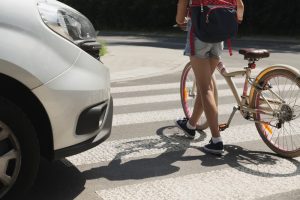
Drivers frequently circle these areas waiting for ride requests, stopping abruptly for pickups and drop-offs in already congested corridors. According to the city's Vision Zero initiative, 80 percent of traffic deaths and serious injuries occur on just 12% of Philadelphia streets.
While pedestrians and cyclists account for a relatively small share of crashes citywide, they represent a disproportionately high percentage of fatalities. Rideshare drivers juggling navigation apps, pickup notifications, and time pressure add another layer of risk to Philadelphia's already challenging streets.
Many of these crashes ultimately lead to personal injury lawsuits filed in the Philadelphia Court of Common Pleas, where liability and damages are evaluated under Pennsylvania personal injury law.
Common Causes of Uber and Lyft Accidents Involving Pedestrians and Cyclists in Philadelphia
Rideshare drivers face unique pressures that contribute to crashes. These are some of the common risks that lead to rideshare collisions:
- Distracted driving: Drivers constantly interact with the app for navigation, ride requests, and messages. Even hands-free operation divides attention from the road.
- Rushing to pickups: Earnings depend on completing rides quickly. Drivers may speed, roll through stop signs, or fail to yield to pedestrians in crosswalks.
- Unfamiliarity with Philadelphia streets: Not every driver knows the city’s one-way patterns, bike lanes, or pedestrian-heavy zones, especially in areas like Rittenhouse Square, Fishtown, or near Temple University. Confusion leads to sudden lane changes and missed signals.
- Fatigue: Long shifts and late-night driving increase the risk of drowsy driving, slowed reaction times, and poor judgment.
- Unsafe drop-offs: Drivers sometimes stop abruptly in traffic lanes, bike lanes, or near crosswalks to let passengers out, creating hazards for approaching cyclists and pedestrians.
Steps to Protect Your Claim After a Rideshare Accident
If you are already receiving medical care for your injuries, whether at Jefferson, Penn Presbyterian, Temple University Hospital, or another Philadelphia provider, there are additional steps that can strengthen your legal claim:
- Contact a lawyer before speaking with insurance adjusters: Uber and Lyft's insurers will move quickly to investigate. Anything you say may be used to reduce your claim. A lawyer can handle these communications and protect your interests.
- Follow through with all medical treatment: Gaps in care give insurers grounds to argue your injuries are not as serious as claimed. Keep every appointment and follow your doctors' recommendations.
- Document your recovery: Keep a written or video journal of your pain levels, mobility limitations, and how the injury affects your daily life. This evidence supports claims for pain and suffering.
- Preserve all evidence: Save photographs of your injuries and the accident scene, keep the clothes and shoes you were wearing, and hold onto any correspondence with the rideshare company.
How Long Do I Have to File a Claim After a Rideshare Accident in Pennsylvania?
Pennsylvania’s statute of limitations gives you two years from the date of injury to file a personal injury lawsuit. This deadline applies whether you were hit by an Uber, Lyft, or any other vehicle. Missing the deadline forfeits your right to pursue compensation through the courts.
Insurance claims should be filed much sooner. Evidence disappears, witnesses forget details, and app data may become harder to obtain over time. Speaking with a personal injury lawyer soon after the accident gives you the best chance of building a strong case.
Can I Still Recover If the Insurance Company Blames Me for the Accident?
Insurance adjusters often argue that the pedestrian or cyclist was partly at fault. Maybe you were crossing outside a crosswalk, or your bike lacked proper lighting at night. Pennsylvania's comparative negligence law allows you to recover damages as long as your share of fault does not exceed 50%.
Your compensation will be reduced by your percentage of responsibility. If a jury finds you 25% at fault, your recovery is reduced by 25%. A lawyer can push back against unfair blame and present evidence showing the driver's negligence caused the crash.
What Compensation Can I Recover After Being Hit by an Uber or Lyft in Philadelphia?
Pedestrians and cyclists injured by rideshare drivers may pursue compensation for:
- Medical expenses, including emergency care, surgery, hospitalization, rehabilitation, and future treatment
- Lost wages from time missed at work during recovery
- Reduced earning capacity if injuries prevent you from returning to your previous occupation
- Pain and suffering for physical pain, emotional distress, and diminished quality of life
- Property damage, including a damaged bicycle or personal belongings
The value of your claim depends on the severity of your injuries, the strength of the evidence, and the available insurance coverage. Catastrophic injuries like traumatic brain injury or spinal cord damage can justify claims well into six or seven figures.
FAQs About Pedestrians and Cyclists Hit by Uber or Lyft in Philadelphia
Do I need to prove the driver was logged into the app to file a claim?
You do not need to prove this yourself. Your rideshare accident lawyer can subpoena app records from Uber or Lyft to establish the driver's status at the time of the crash. This data shows whether the driver was offline, waiting for a request, or actively transporting a passenger.
What if the Uber or Lyft driver fled the scene?
Hit-and-run accidents complicate recovery but do not eliminate your options. If you or a witness captured the license plate, app records and police investigation may identify the driver. If the driver remains unknown, your own uninsured motorist coverage may provide compensation.
Can I sue Uber or Lyft directly, or only the driver?
Uber and Lyft classify drivers as independent contractors, which limits their direct liability. However, you may file claims against their commercial insurance policies when the driver was active on the app. In some circumstances, arguments may exist to hold the company liable for negligent hiring or supervision.
What if I was jaywalking or not using a crosswalk when I was hit?
You may still have a valid claim. Pennsylvania's comparative negligence law reduces your recovery by your share of fault but does not bar recovery unless you are more than 50% responsible. A lawyer can argue that the driver still had a duty to watch for pedestrians and avoid collisions.
How long does a rideshare accident claim take to resolve?
Timelines vary depending on the complexity of the case, the severity of injuries, and whether the parties can agree on a settlement. Some claims resolve within months. Cases involving catastrophic injuries, disputed liability, or litigation generally take longer.
Hit by an Uber or Lyft While Walking or Biking in Philadelphia? We Can Help
If a rideshare driver hit you while you were walking or biking in Philadelphia, you do not have to sort through insurance companies and legal questions on your own. The steps you take now can directly affect how much compensation you recover and how smoothly your claim moves forward.

At Rothenberg Law Firm LLP, we help injured pedestrians and cyclists hold negligent drivers and their insurers accountable. We know how to investigate rideshare claims, secure critical app data, and identify every available source of compensation.
Call us today or contact us online for a free consultation. The sooner you reach out, the sooner we can begin protecting your rights and building your case. You pay nothing up front. We only get paid if we recover money for you.