When can a trucking company be held responsible for a Philadelphia truck accident?
Generally speaking, a trucking company may be responsible when its driver was acting within the scope of employment or when the company contributed to the crash through poor hiring, training, maintenance, or safety practices.
A trucking company can be held responsible for a Philadelphia accident if its own actions, policies, or safety violations helped cause the crash, or if its driver caused the collision while performing job duties.
The company’s liability is not limited to direct misconduct. Under respondeat superior, a carrier can be vicariously liable for a driver’s negligence within the scope of employment, and federal safety rules impose duties the company cannot simply pass off to others.
This distinction matters because it can open the door to much higher insurance coverage. Commercial trucking policies often provide far more compensation than a truck accident claim against the driver alone.
Key Takeaways for Trucking Company Liability in Philadelphia
- Trucking companies are vicariously liable for their drivers' negligence under respondeat superior when the driver was acting within the scope of employment at the time of the crash
- Negligent hiring, training, supervision, retention, and maintenance are independent theories of liability that hold the trucking company directly accountable for its own failures
- Federal regulations define "employee" to include independent contractors operating commercial motor vehicles, which means the independent contractor label does not automatically shield a carrier from liability
- Violations of FMCSA regulations, including hours-of-service limits, maintenance requirements, and driver qualification standards, serve as direct evidence of carrier negligence
- Evidence, including onboard camera footage, dispatch communications, driver qualification files, and maintenance records, may be lost or destroyed without a formal legal hold
Ask The Rothenberg Law Firm
Q: The truck driver was cited at the scene, but the trucking company was not. Does that mean the company is off the hook?
A: No. Police citations address traffic violations at the scene. They do not determine civil liability for the trucking company's own negligence in hiring, training, supervising, or maintaining the vehicle. An investigation into the carrier's compliance, driver qualification practices, and maintenance records may reveal company-level liability that the police report does not address.
Q: How quickly does evidence of trucking company negligence disappear after a crash?
A: Very quickly. Some electronic evidence, such as onboard camera footage or dispatch communications, may be overwritten within days. Even the truck itself may be repaired or scrapped before a mechanical inspection is conducted. Sending a legal hold notice to the carrier and its insurer within days of the crash can be crucial after a truck accident to preserve evidence and protect your claim.
Q: The trucking company offered my family a settlement within days of the accident. Is that a good sign?
A: Not necessarily. An early settlement offer may arrive before the full extent of your injuries is known and before key trucking evidence—such as ELD data, dispatch records, driver files, maintenance records, and camera footage—has been reviewed. It is usually best to have the offer evaluated before signing a release.
Is a Trucking Company Automatically Liable When Its Driver Causes an Accident?
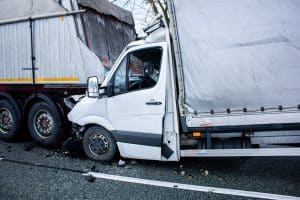
Not automatically. A trucking company is often liable when its driver causes a crash while acting within the scope of employment or while operating under the carrier’s authority. The company may also be directly liable if its own conduct—such as negligent hiring, inadequate training, unsafe dispatching, or poor maintenance—helped cause the truck accident.
But liability still depends on the facts of the crash, the driver’s relationship to the carrier, and the company’s role in the unsafe conduct.
What Is Negligent Hiring and How Does It Make a Trucking Company Liable?
Negligent hiring holds a trucking company directly liable for putting an unqualified or dangerous driver behind the wheel. This is the company's own negligence, not the driver's, and it creates liability independent of respondeat superior.
What Are Carriers Required to Do Before Putting a Driver on the Road?
Federal regulations under 49 CFR Part 391 require carriers to verify that every driver holds a valid commercial driver's license, passes a DOT physical examination, meets minimum age and experience requirements, and has a clean enough safety record to operate a commercial vehicle.
Carriers must also review each driver's employment history for the previous three years, check for prior drug and alcohol violations through the Federal Motor Carrier Safety Administration (FMCSA) Clearinghouse, and conduct a road test or obtain equivalent documentation.
A trucking company that skips these steps, ignores red flags in a driver's history, or hires a driver with a record of violations or prior crashes may be directly liable for a negligent hiring claim.
How Do Related Theories of Direct Liability Apply Beyond Hiring?
Negligent hiring targets the decision to put a driver on the road. Several related theories target what happens after that decision. Each applies to a different stage of the employment relationship:
- Negligent training applies when the carrier fails to provide adequate instruction on vehicle operation, safety procedures, cargo securement, or FMCSA compliance
- Negligent supervision applies when the carrier fails to monitor driver compliance with safety rules, hours-of-service regulations, or company policies
- Negligent retention applies when the carrier keeps a driver employed despite knowledge of dangerous conduct, multiple violations, or crash involvement that warrants termination
Each of these theories targets the trucking company's own decisions, not the driver's conduct on the road.
Can a Trucking Company Be Liable for Poor Vehicle Maintenance?
Yes. Federal regulations under 49 CFR Part 396 require carriers to systematically inspect, repair, and maintain every commercial motor vehicle in their fleet. This includes brakes, tires, steering systems, lighting, coupling devices, and all other safety-critical components.
A trucking company that defers brake inspections, ignores tire wear, or allows a vehicle with a known mechanical defect to operate on Philadelphia's roads has violated federal law. When that deferred maintenance contributes to a crash, the carrier bears direct liability for the resulting injuries.
Maintenance liability extends beyond the carrier in some cases. Third-party maintenance contractors that perform substandard repairs or miss critical defects during inspections may also bear responsibility.
Manufacturers of defective components, such as faulty brake systems or tires that fail under normal operating conditions, may face product liability claims.
Does the Independent Contractor Defense Protect Trucking Companies?
The independent-contractor label does not automatically shield a motor carrier from liability. Federal motor carrier safety rules define “employee” to include an independent contractor while operating a commercial motor vehicle, which can undercut a carrier’s attempt to avoid responsibility through driver classification alone.
However, civil liability still depends on the facts, including the carrier’s operating authority, lease/control relationship, dispatch role, and whether the driver was acting in furtherance of the carrier’s business.
What Role Do FMCSA Violations Play in Proving Trucking Company Liability?

FMCSA violations can be strong evidence of carrier negligence. When a trucking company or its driver violates federal safety regulations and a crash results, the violation itself supports the claim that the carrier failed to meet its legal duties.
The most common FMCSA violations that arise in Philadelphia truck accident cases include the following:
- Hours-of-service violations under 49 CFR Part 395, where a fatigued driver exceeded the 11-hour driving limit, the 14-hour on-duty window, or the 60/70-hour weekly cap
- Driver qualification violations under 49 CFR Part 391, where the carrier hired a driver without verifying their license, medical fitness, or safety record
- Vehicle maintenance violations under 49 CFR Part 396, where the carrier failed to inspect, repair, or maintain safety-critical systems
- Drug and alcohol testing violations under 49 CFR Part 382, where the carrier failed to conduct required pre-employment, post-accident, or random testing
- Cargo securement violations under 49 CFR Part 393, where improperly loaded or unsecured freight shifted during transit and contributed to a rollover or loss of control
Each violation may support a carrier liability claim if it helped cause the crash. A carrier with multiple violations across different regulatory categories may face arguments that its overall safety culture was deficient, which strengthens the claim beyond any single infraction.
The carrier's public safety record is available through the FMCSA's Safety Measurement System (SMS), which tracks inspection results, crash history, and compliance ratings.
What Evidence Proves Trucking Company Liability in Philadelphia?
Proving trucking company liability requires evidence that goes far beyond the police report and the driver's statement at the scene. The most valuable evidence in these cases comes from the carrier's own records.
Evidence that a Philadelphia truck accident attorney may pursue to establish carrier liability includes the following:
- Electronic logging device (ELD) data showing the driver's hours-of-service compliance in the days and weeks leading up to the crash
- The driver's qualification file, including license verification, medical certification, employment history, road test results, and prior violation records
- The vehicle's maintenance and inspection records, revealing whether required inspections were performed and whether known defects were repaired
- Dispatch records and delivery schedules showing whether the carrier pressured the driver to meet unrealistic timelines
- Drug and alcohol testing records showing whether the carrier complied with pre-employment, random, and post-accident testing requirements
- The carrier's FMCSA safety record, including prior inspection results, out-of-service orders, and crash history
This evidence has a short shelf life. Some electronic records and video footage may be overwritten within days without a formal preservation demand.
A Philadelphia truck accident lawyer sends spoliation letters to the carrier and its insurer immediately upon engagement to secure this evidence before it disappears.
Answers to Your Philadelphia Trucking Company Liability Questions
What types of trucking companies may be held liable for a Philadelphia accident?
Long-haul carriers, regional freight companies, local delivery services, construction hauling companies, waste management operators, and any other business that operates commercial motor vehicles may be held liable.
Can I sue the trucking company even if I was partially at fault for the accident?
Yes. Pennsylvania follows a modified comparative negligence rule under 42 Pa. C.S. § 7102. You may recover compensation as long as your share of fault is not greater than the fault of the defendant(s). The final award is reduced by your percentage of responsibility.
What is the statute of limitations for a trucking company liability claim in Philadelphia?
Pennsylvania's statute of limitations for personal injury claims is two years from the date of the accident under 42 Pa. C.S. § 5524. Claims against government entities may require a written notice of intent within six months. Acting early is critical in truck accident cases because key evidence may be destroyed long before the statute of limitations expires.
How much does it cost to hire a Philadelphia truck accident lawyer to pursue a claim against a trucking company?
The Rothenberg Law Firm LLP handles truck accident cases on a contingency fee basis. You pay no upfront fees and no attorney costs unless the firm recovers money for you. A free consultation lets you discuss your case and understand your legal options without financial risk.
Holding the Trucking Company Accountable After a Philadelphia Accident
When a truck accident causes serious injuries, the legal claim needs to reach beyond the driver to the company that hired, trained, equipped, and dispatched that driver onto Philadelphia's roads.

Trucking company liability is not automatic in every case, but the evidence to establish it is available to personal injury attorneys who know where to look and act quickly enough to preserve it.
The Rothenberg Law Firm LLP has more than 55 years of experience representing truck accident victims and has recovered significant results. Call 215-732-7000 or reach us through our online contact form to discuss your truck accident claim. Consultations are free and confidential.