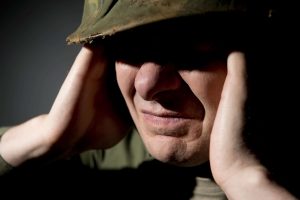
Veterans and current members of the military may be entitled to compensation after experiencing hearing loss or damage to their hearing after using 3M Combat Arms Ear Plugs. The defective CAEv2 ear plugs were released by 3M exclusively for armed forces between the years of 2003 and 2015. You may have used Combat Arms earplugs if you have served in the following missions:
- The Iraq War
- War in Afghanistan
- Operation Ocean Shield in the Indian Ocean
- The war in North-West Pakistan (part of War on Terror)
- War in Somalia
- Intervention in Libya (2011- part of Libyan Crisis)
- American-led intervention in Iraq (2014 - 2017)
- American-led intervention in Syria (2014 to present)
- Yemeni Civil War (2015 to present)
- American Intervention in Libya (2015 to present)
- United States Border Patrol
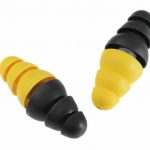
 Military workers may wear ear plugs to protect themselves against high noise levels during explosions, gunfire, operation of aircraft, or other loud events. After relying on CAEv2 ear plugs to protect their hearing, thousands of military workers are still reporting irreversible hearing loss and damage caused by the product's defective design.
If you or a loved one served in the military and used CAEv2 ear plugs for noise-sensitive training or missions, contact the Rothenberg Law Firm for a free consultation.
***Your initial consultation with a personal injury lawyer is always free.
***We do not take a fee, unless and until we are successful in recovering money for you.
Testing Reveals 3M Products' Defects
3M Combat Arms Earplugs (product CAEv2) were released with a dual-sided feature intended to make them suitable for noise-sensitive military applications. When worn in the "open" position, the earplugs block out loud noises while allowing softer sounds like spoken commands and enemy movements to pass through. When worn in the "closed" position, the earplugs are advertised to block out all sound up to 20 decibels.
However, a whistle blower report by 3M competitor, Moldex-Metric, Inc., reveals that researchers from Aearo Technologies, Inc., which was acquired by 3M in 2008, manipulated their test data to falsify the efficacy of their CAEv2 ear plugs. Only when worn in a specific orientation--with the third flange of the earplug folded upward--could the ear plugs be used to block out sounds up to 20 decibels. When simply placed in the ear, Moldex-Metric showed that CAEv2 ear plugs could only block noises up to 10.9-decibels.
In addition, the ear plug's stem is too short to effectively fit the user's ear, causing it to become subtly dislodged so loud noises can still cause damage to the user's ear canal. These important details were not included in the products' warning label or in an instruction manual, causing the ears of military workers to be exposed to harmful noise levels unintentionally on the job.
Injuries from 3M Combat Arms Earplugs Intensify Symptoms of PTSD
Injuries sustained from using 3M Combat Arms Earplugs include
- Hearing loss
- Tinnitus (ringing in the ears)
- Auditory processing disorder (APD)
These hearing ailments may have long-term psychological effects on soldiers, especially those with PTSD. Ringing in the ears can trigger or contribute to PTSD attacks in veterans. The after care of those affected will last a lifetime and require costly medical care. If you or a loved one has been affected by symptoms mentioned above and match the criteria mentioned, you may have a product liability case for a personal injury law firm.
Defective 3M Combat Ear Plugs Put Military Service Members at Risk of Harm
According to an article in Military Times, a recall of 3M combat ear plugs has led to a $9.1 million settlement from the company “to resolve allegations that it knowingly sold the U.S. military defective earplugs.” The specific earplugs at issue are Version 2 of the company’s dual-ended Combat Arms Earplugs, and 3M sold them to the Defense Logistics Agency “without disclosing defects that decreased the actual effectiveness of the hearing protection the device offered.” In other words, the defective product put military service members at risk of injury.
What is wrong with these earplugs? The article explains that they were “too short for proper insertion into users’ ears,” and that “as a result, the earplugs could gradually—and subtly—loosen until they did not perform the desired noise cancellation for certain individuals.” Due to the nature of the defect, soldiers using the earplugs and relying on them to prevent injury might not realize that the product was not working properly. This was a design defect, which means that there was an inherent defect in the earplugs. A design defect occurs before a product is ever manufactured, and there is no way that the product can be made in a way that is safe since the defect is in the very design of the product or one of its components.
To be clear, the United States alleged that 3M knew about the ear plug defect, and that it failed to disclose the defect when it agreed to the military contract. The specific lawsuit that resulted in the $9.1 million settlement was brought under the False Claims Act. Through the False Claims Act, a private party can file a claim on the government’s behalf if that party believes the defendants—in this case 3M—“submitted false claims for government funds.” The lawsuit arose under a whistleblower provision of the False Claims Act, and the law allows the whistleblower to receive a portion of funds obtained through a settlement or verdict. In this case, just over $1.9 million of the settlement funds will go to the whistleblower, according to the U.S. Department of Justice.
Contact a Product Liability Lawyer
The Rothenberg Law Firm Accident and Injury Lawyers has been helping injured people for over 50 years. If you have sustained an injury after using 3M CAEv2 Combat Arms Earplugs, call 800-624-8888 to receive a free consultation or submit a contact form to InjuryLawyer.com.